

WASHINGTON – Maury Johnson, a West Virginia landowner impacted by the Mountain Valley Pipeline (MVP), is facing off with the U.S. Department of Transportation Pipeline and Hazardous Materials Safety Administration (PHMSA) over the safety of pipelines. Indeed, Johnson promises a news conference today, Oct. 10 about the matter, according to a news release from Johnson.
Headlined, “Mountain Valley Pipeline Construction Violations Continue, Along with Resistance,” the news release reveals that Johnson has scheduled a news conference at the U.S. Department of Transportation Pipeline and Hazardous Materials Safety Administration at 1200 New Jersey Avenue SE in Washington. It is scheduled for 1 p.m.
Johnson says the purpose is to point to current MVP Safety Violations on his farm and other area properties. He lives in Greenville, Monroe County, in southeastern West Virginia. Johnson’s well water and organic farm are being damaged under eminent domain for construction of the controversial 303-mile fracked gas MVP, he shares.
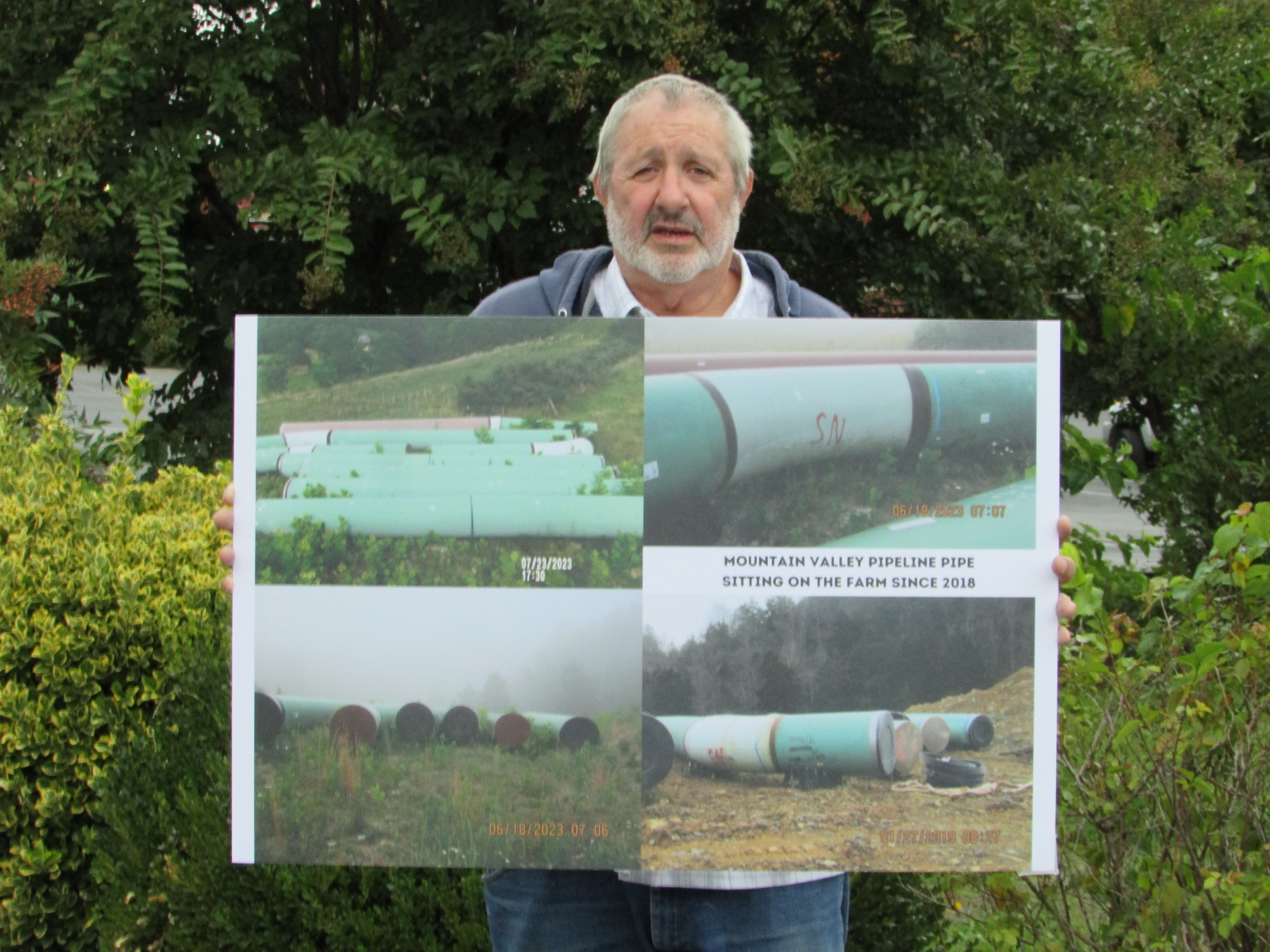
In his release, he states, “Notorious for hundreds of violations over multi-year start-and-stop construction, (the) MVP is currently installing pipe with expired safety coating, running equipment across Maury Johnson’s farm, and parking equipment on top of the buried pipeline, possibly violating construction permits and adding to the likelihood of stress fractures, leaks and explosions should MVP become activated.”
He continues, “Maury repeatedly requested a Pipeline and Hazardous Materials Safety Administration (PHMSA) onsite inspection this week regarding the urgent MVP safety violations. On 10/4/23 PHMSA Inspectors met with Maury and several of his neighbors who are all impacted by the MVP project. They expressed concerns for not only the local area but concerns from across WV and VA.”
As a result, Johnson says he is traveling to Washington on Tuesday, Oct. 10. He says that he “ … has respectfully requested a meeting at the US DOT / PHMSA Office of Pipeline Safety – Eastern Region following a phone conversation and his latest filing regarding pipe safety issues.”
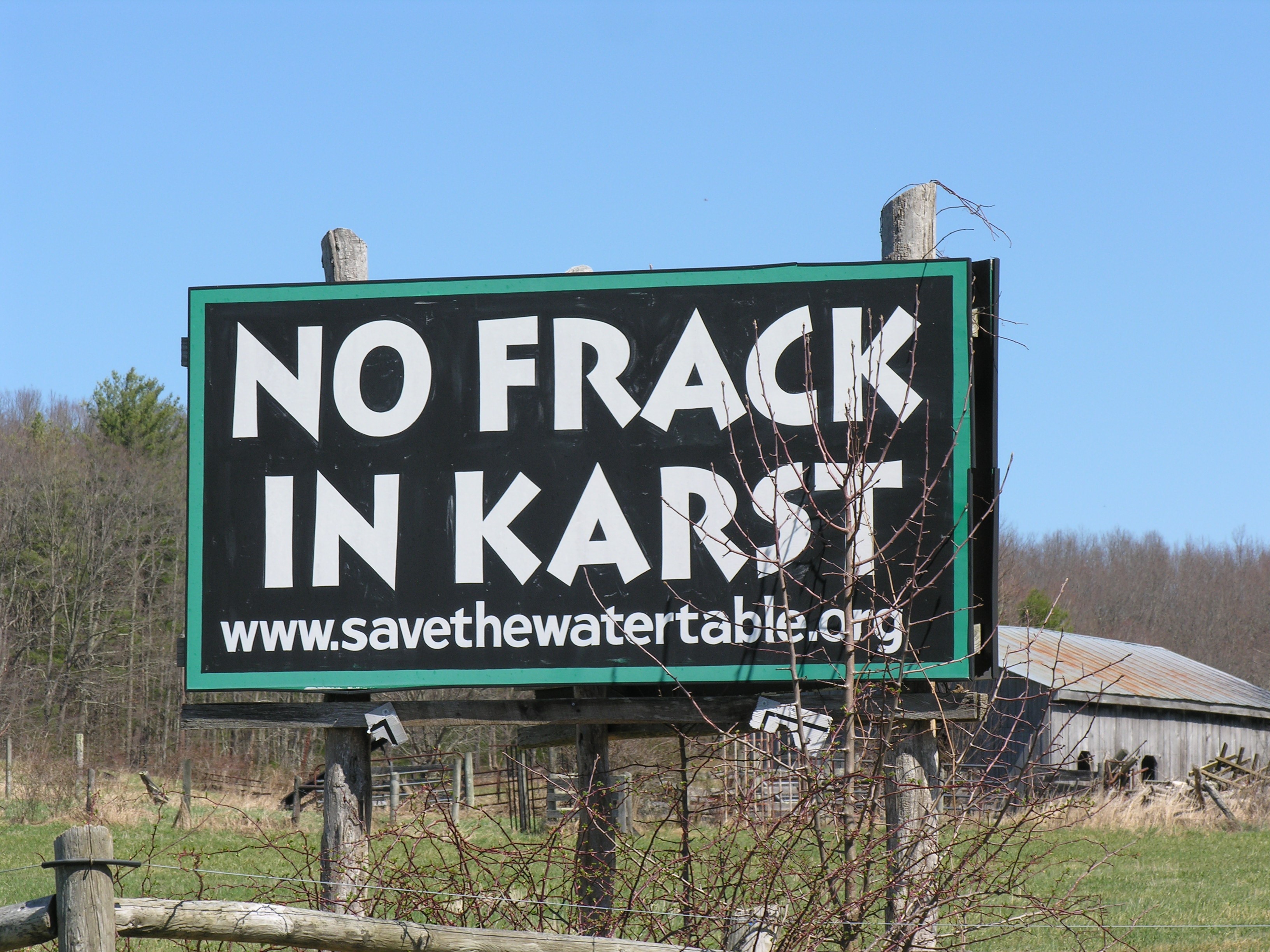
Safety a Priority?
His statement continues, “According to an email sent Tuesday by DOT/PHMSA Office of Pipeline Safety, Eastern Region, Community Liaison Nitander ‘Nita’ Raju, PHMSA inspectors are looking into the concerns and an inspector is coming to Maury’s property on October 4, 2023. “’Safety is our priority,’ she wrote, ‘At your earliest convenience, please provide your questions to me so we can address them as soon as possible. If you have any additional concerns or information regarding the MVP, please provide them to me as well.’”
Johnson further states the he will hold his news conference whether or not PHMSA has met with him, saying that he hopes his concerns will be heard and his questions answered so that he will be in a position to state “… that PHMSA takes pipeline safety seriously and are always willing to address landowners’ and citizens’ concerns.”
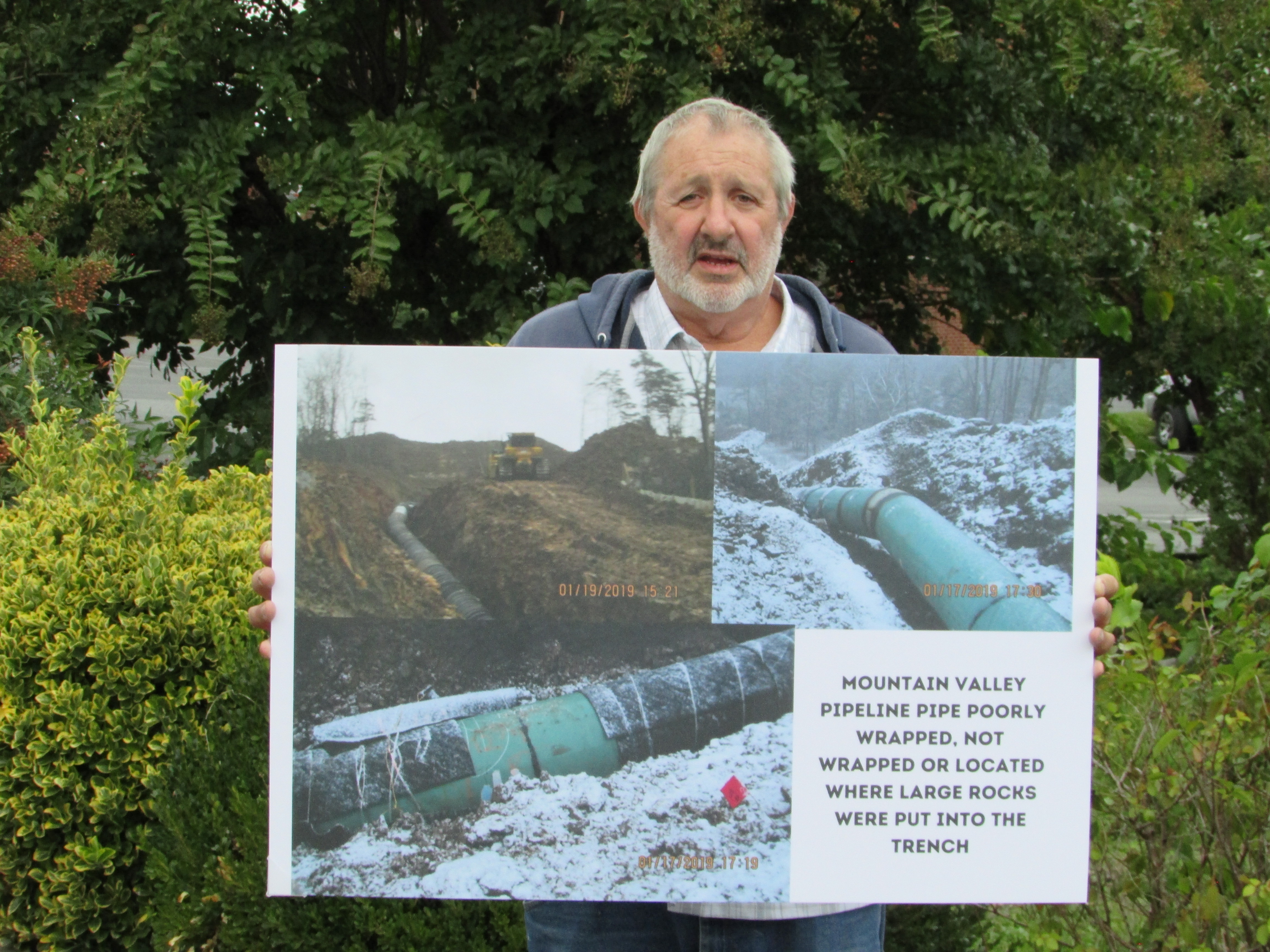
Ongoing MVP Safety Violations
Johnson shares, “This week, MVP owner Equitrans Midstream Corporation agreed to new safety measures after PHMSA ordered a safety review of the project, arguing segments left buried underground or exposed to the elements during years of delay could pose a safety risk. Several environmental groups have been warning PHMSA these risks could result in a catastrophic failure. Equitrans will be required to submit a remedial work plan for pipeline damage and conduct tests on coatings designed to prevent corrosion. Impacted residents remain concerned.
“MVP is also awaiting a Federal Energy and Regulatory Commission (FERC) decision on permission to increase transportation rates. As chair of the Senate Energy and Natural Resources Committee, (U.S. Sen. Joe) Manchin – MVP’s champion and by far the largest US Congressional recipient of money from fossil gas pipeline companies – wields significant control over FERC.
Ongoing Resistance to MVP
Johnson notes that resistance to the MVP is ongoing despite its fast-track approval by Congress and the White House. “In addition to documenting pipeline safety violations and related explosion threats, public opposition has centered on challenging MVP’s permitting through wetlands and national forests, and raising awareness around landslides and earthquakes in the pipeline zone. MVP runs through the Appalachian Mountains, Jefferson National Forest, under the Appalachian Trail and hundreds of stream crossings. The original budget of $3.5 billion is now estimated to be $6.2 billion. FERC recently granted MVP another 4-years to complete.”
He reports, “Protect Our Water, Heritage, Rights (POWHR), a coalition of groups from across several Virginia and West Virginia counties, has joined forces with 7 Directions of Service, an Indigenous-led North Carolina based organization, to oppose MVP and the proposed MVP Southgate Extension Project. Numerous groups from across the country have expressed their opposition to these MVP projects across Appalachia.”
He adds, “Appalachians Against Pipelines has engaged in a persistent direct action campaign to stop the Mountain Valley Pipeline since 2018. Volunteers have physically blocked construction for numerous days.”
Ongoing Climate Breakdown
Johnson also notes, “As the US Energy Information Administration reports that US exports of fossil gas set a record high in the first half of 2023, climate disasters fueled by gas, oil and coal combustion continue to devastate communities around the globe. While expanding gas infrastructure primarily for export, the U.S. continues recruiting countries to the Global Methane Pledge to voluntarily reduce global methane emissions by at least 30 percent from 2020 levels by 2030 – a target considered essential for keeping a 1.5C future within reach.”
© Michael M. Barrick, 2023. All photos except “Karst Topography” courtesy of Maury Johnson. If you’d like to learn more about Maury Johnson and other people and groups working in opposition to the MVP, consider checking out my book, “Fractured Sanctuary: A Chronicle of Grassroots Activists Fighting Pipelines of Destruction in Appalachia”
An earlier version of this article had typographical errors. I apologize. They’ve been corrected (MMB, publisher).
 Appalachian Chronicle
[…] Johnson continues the fight. Sharing in a news release earlier this month, he said, “Notorious for hundreds of violations over multi-year start-and-stop construction, […]
[…] you’re a farmer like Maury Johnson, who has relentlessly testified to every single possible agency, governing board, or whatever it is […]
[…] West Virginian Maury Johnson Facing Off with Feds Over MVP Pipeline Safety (10/09/23) […]