
The Rural Urban Bridge Initiative (RUBI) offers prescriptions for recovery, including an ask for $400 million from the DNC for rural communities, a ‘Community Works’ initiative, and more
LENOIR, N.C. – The Rural Urban Bridge Initiative (RUBI), a small 501 (c)4, is leading a broad coalition of progressive Democrats and allies that recently called upon new Democratic Party Chairman Ken Martin and the Democratic National Committee (DNC) to allocate $400 million to reach rural areas and working-class voters.

RUBI Executive Director Anthony Flaccavento says, “Their budget is a tiny fraction of that. What we are asking them to do is to lead the charge, to advocate with Democratic and liberal donors and party decision makers to allocate that amount of funds to rural/working class communities.” In short, a “bottoms up” approach.
Lacking to do so, they say, will ensure continued losses such as the one just experienced last November. Indeed, in the letter to the DNC, the group argues, “As badly as we’re losing, we may not yet have hit bottom.”
Mr. Flaccavento spoke extensively and passionately during a Zoom interview on March 4 about these outreaches to the national party as well as RUBI’s Community Works initiative which has established pilot programs in numerous counties in Virginia and Georgia.
He was blunt in his assessments as he addressed a wide range of topics regarding the party’s history with Labor and the working class, and why RUBI believes they have a model that will bring those citizens back to the Democratic Party.
Own up to Our Mistakes
Mr. Flaccavento, who played a key role in the development of the documents, insists that “To win back rural and working class we must own up to our mistakes.”

Mr. Flaccavento says an apology to Labor and working class voters for abandoning them in recent years after decades of championing policies that valued and protected them is essential – immediately. He says, “First, we must apologize to rural communities and the Working Class. NAFTA is just the tip of the iceberg.” Examples, he says, include trade policy, our relationships with the World Trade Organization, and allowing China favored nation status.
“If the Democratic Party is the party of the working class, why don’t they vote for us?” asks Mr. Flaccavento. “So long as we don’t acknowledge these mistakes, we won’t win back trust, and we’ll continue to make the same kinds of mistakes in the future.”
“We need to tell people, ‘We have heard you.’ We are going to focus on the concerns of the working class and not turn around.”
RUBI Executive Director Anthony Flaccavento
The Most Pressing Question Facing Democrats
It was the last question I asked Mr. Flaccavento during our conversation that evoked a response that reveals the challenges facing RUBI – or any group seeking to rebuild the shattered Democratic Party. I asked: “What does the Democratic Party stand for in 2025 as best as you can tell?”
He leaned back, rubbed his faced with his hands, and looked upwards, seemingly beyond the ceiling into the Cosmos. He shook his head and simply offered, “I don’t know. I’m hopeful Ken Martin’s memo is our future.”
The Ken Martin Memorandum
Mr. Flaccavento is referencing a Memorandum dated Feb. 18, 2025 by the new DNC Chair. It is addressed “To Interested Parties” with the subject line, “Democrats Will Fight Against Trump’s War on Working People.”
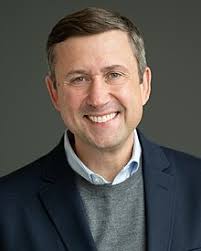
Mr. Martin writes in the first paragraph, “I believe the canary in the coal mine for what happened on November 5 was the recent showing that, for the first time in modern history, Americans now see the Republicans as the party of the working class and Democrats as the party of the elites. … So, as the Trump agenda fails our nation’s working communities, we have to take seriously the job of repairing and restoring the perceptions of our party and our brand. It’s time to remind working Americans – and also show them every day – that the Democratic Party always has been and always will be the party of the worker.”
Mr. Martin ends the letter, “As I take over as Chair of the DNC, union workers and labor leaders will be core to my decision-making. As Trump wages his war on working families, Democrats will fiercely answer the call to my favorite old union song, “Which Side Are You On?” I’ll tell you what: Democrats are on the side of the worker. We will show Americans every day that workers in fact do have more power than any billionaire.”
RUBI Responds
Even before Mr. Martin was elected DNC chair on February 1, RUBI was working to make recommendations and seek collaboration with the new leadership.
So, less than a month into Mr. Martin’s term, on Feb. 26, RUBI issued a press release, a letter to Mr. Martin, and a letter to the DNC making a forceful argument that the Democratic Party must invest far more resources in rural areas. The letter to the DNC includes seven recommendations for improving outreach to Labor and the working class.
In the letter, RUBI signatories argue, “As you know, Democrats spent over $4 billion on advertisements in the 2024 campaign cycle, outspending Republicans on the presidential race as well as both Senate and House races. Meanwhile, rural and factory town Democratic committees and candidates were starved for funds, as they have been for many years. Allocating a small percentage of those funds annually to long-term organizing and outreach in these communities would, we are confident, do far more to broaden our base of voters and win elections.”
It continues, “The signatories to this letter fight for rural and working-class people. Most of us hail from or reside in small towns and rural communities. Whether through local organizing and party building, developing concrete tools for policy and communications, or careful analysis of what works and what does not, our collective experience can help Democrats change course and rebuild our base.”
So, they’ve asked for a meeting with Mr. Martin, says Mr. Flaccavento. As the letter to Mr. Martin asserts, “If the leadership of the DNC would passionately and forcefully call upon the complex network of large and small contributors and Democratic fundraising organizations to explicitly direct just 10% of their resources to rural and working-class districts and candidates, it could produce deeply significant and enduring long-term gains for the Democratic Party as a whole.”
“If the Democratic Party is the party of the working class, why don’t they vote for us? So long as we don’t acknowledge these mistakes, we won’t win back trust, and we’ll continue to make the same kinds of mistakes in the future.”
RUBI Executive Director Anthony Flaccavento
As previously noted, in response to this outreach by RUBI, Mr. Flaccavento agreed to an interview to talk further about it and their work. Portions of the interview follows in Q&A format. It has been edited for brevity and clarity. Answers omitted may appear in future articles.
Q: What evidence will you be looking for to see if Mr. Martin has embraced – and will do so consistently – the “bottoms up” approach?
A: “So, the preliminary evidence after four weeks of his leadership is positive for three reasons,” said Mr. Flaccavento. He explained, “First the February 18 Memo.” Mr. Flaccavento observed, “It is focused on working people and unions. I have never seen a more supportive statement of labor from a chair.”
The second reason Mr. Flaccavento has confidence in Martin is his “Organize Everywhere Tour.” Mr. Flaccavento observed, “Martin said, ‘We need to get the hell out of D.C.’ He has. Some could consider it an act, but he is visiting not just blue states. He’s holding listening sessions for the working class – not the donor class – in Town Halls. Of course, he may be talking to donors, but he is out there listening to the people we need to reach.”
The third reason Mr. Flaccavento is hopeful is that RUBI and Martin are in overlapping circles and Martin has noted the work of RUBI, says Mr. Flaccavento. “He has done shout-outs for RUBI at least four times. He has been complimentary. It sets him apart from leaders of the DNC over the last several decades. We hope to meet and begin looking at strategy.”
Q: $400 million sounds like a small investment in light of the increasing costs of campaigns. How did you arrive at this number?
A: “So, this was a large group. We had two calls and a million emails. The whole letter and documents came from this group. The idea emerged to ask that some portion of the more than $4 billion spent on TV ads during the last cycle be reallocated to investment in rural and working class communities across the country. While 10% was something of an arbitrary number, we all agreed that a $400 million investment in the roughly 2000 counties that are substantially rural would make an enormous difference.”
He shares, “We have recommended that this money be invested primarily in three ways: to local Democratic Committees, to rural and working class candidates and campaigns, and to grassroots community groups who do organizing, outreach, candidate training and bridge building with the wider community.” He added, “An annual investment for a significant period of time would make a difference. It wasn’t long ago that these people were voting for us,” argues Mr. Flaccavento.
Q: Let’s talk a bit about the value of the RUBI Community Works initiative. RUBI’s website states, “The Community Works initiative (“CWorks”) is one of our most important strategies for depolarizing the red-blue divide in rural communities.”

A: He echoed the RUBI letter to the DNC, which states, “… Community Works enables local Democratic Party committees to both broaden their base and improve the perception of Democrats by undertaking regular, concrete, non-political work to solve local problems, in partnership with civic groups, churches, non-profits, and businesses.”
In short, Mr. Flaccacento says, Democrats need to be involved and active in their communities in non-political as well as political ways.” He adds, “When people say, ‘We can’t win in deep red places like that,’ I say, ‘You did not too long ago.’ Yet every cycle that we did not hear or minimized people’s grievances, they moved further away from Democrats. So it has become a self-fulfilling prophecy”
The initiative, which will be the focus of a future article, is being piloted in four counties each in Virginia and Georgia.
Q: In the letter to the DNC, you call for the creation of an incubator fund and an accelerator fund. How do you envision incubator and accelerator funds being put to use?
“This supports RUBI’s strategy to build a long-term presence in rural communities. Incubators help test new ideas; accelerators help identify these ideas that are deserving of funding to bring successful efforts to scale.”
Q: Do you agree that Citizens United contributed to these electoral shifts? If so, how can you counter that in light that the beneficiaries of this dark money have now been entrenched for 10-15 years?
A: “For God’s sake, yes! Absolutely. But there’s more. Where we are with money in politics is a disaster.” He says Trump is in office in part because of money in politics and largely because of the abandonment of the Fairness Doctrine which required broadcasters to provide an opportunity for contrasting views on political topics to be presented, and the general decline of the media as well as the rise of social media. “These two things caused as much damage as anything.”
Q: The challenge, it would seem, is that modern news reporting must be dramatic and contentious. Building bridges simply doesn’t offer the drama that resistance does. What do you think?
The main problem with resisting is that we must do more than say, ‘This is terrible.’ We have to show that we’re the party that cares.” He acknowledged that there is a place and time for resistance, including now, but points to the need for long-term investment in rebuilding trust and winning rural and working class voters back as equally important. As an example, he offers, “We need to make a rural investment in radio. There are more than 1,000 rural radio stations. We should be all over radio. It’s cheap and has a wide reach.
“We need to tell people, ‘We have heard you.’ We are going to focus on the concerns of the working class and not turn around.”
© Michael M. Barrick, 2025.
 Appalachian Chronicle
[…] In fact, the one idea I’ve heard from Democrats is not what you might call creative: The Rural Urban Bride Initiative (RUBI) argues that their party’s path to victory is to have their… […]
[…] Democrats Can Win Back Rural Voters Argue Progressive Democrats in Letter to the New DNC Chair […]