
Sociologist and former underground Union miner Wess Harris asserts East Tennessee State University revoked Exhibit invitation because it revealed too much truth about how coal miners were treated by coal operators – including the Esau scrip system of institutionalized rape

This ‘One Pounder’ fired artillery against coal miners. It was given to Bill Blizzard by a mine operator. Harris adds, ‘It is Field artillery used by the Our Story Traveling Museum to blow holes in lies told by coal companies (and others!).’ Courtesy Wess Harris.
Note: This is the fourth article about the “Our Story Traveling Museum” by Wess Harris. Links to previous articles are at the end of this article.
JOHNSON CITY, Tenn. – The Center of Excellence for Appalachian Studies and Services (CASS) is based here on the campus of East Tennessee State University (ETSU). According to its website, “The mission of the Center of Excellence is to promote a deeper understanding of Appalachia and to serve the region through research, education, preservation, and community engagement. The Center is part of the Department of Appalachian Studies and consists of four components.” One is the Reece Musuem, which, according to the website, ” … hosts a wide range of exhibits.”
One such exhibit was to be the “Our Story Traveling Museum” (formerly “When Miners March Traveling Museum), curated by Wess Harris, a West Virginia sociologist, former underground Union miner, and long-time critic of the way the struggles of coal miners who worked and died to form the United Mine Workers of America (UMWA) is generally portrayed in “official” circles.
ETSU Reece staff suggested the exhibit
The idea for the exhibit orignated at ETSU, says Harris. Reece Executive Director Rebecca Proffitt and her supervisor, Dr. Ron Roach, invited him to campus. He was teaching with his traveling museum to a class led by Appalachian Studies instructor Ted Olsen on ETSU’s campus. It was the spring of 2022. Harris shares, “I think he invited Ron and Becca in. They were blown away. They told me, ‘You’re going to be an anchor exhibit.’ They told me it would run from October 2023 until April 2024.” Indeed, Proffitt made a visit to Harris’s home in November of 2022 to get a look at the collection. Soon, plans were made to begin setting up the exhibit on Oct. 16, 2023, with the Opening set for Oct. 30 and Closing panned for April 12, 2024.
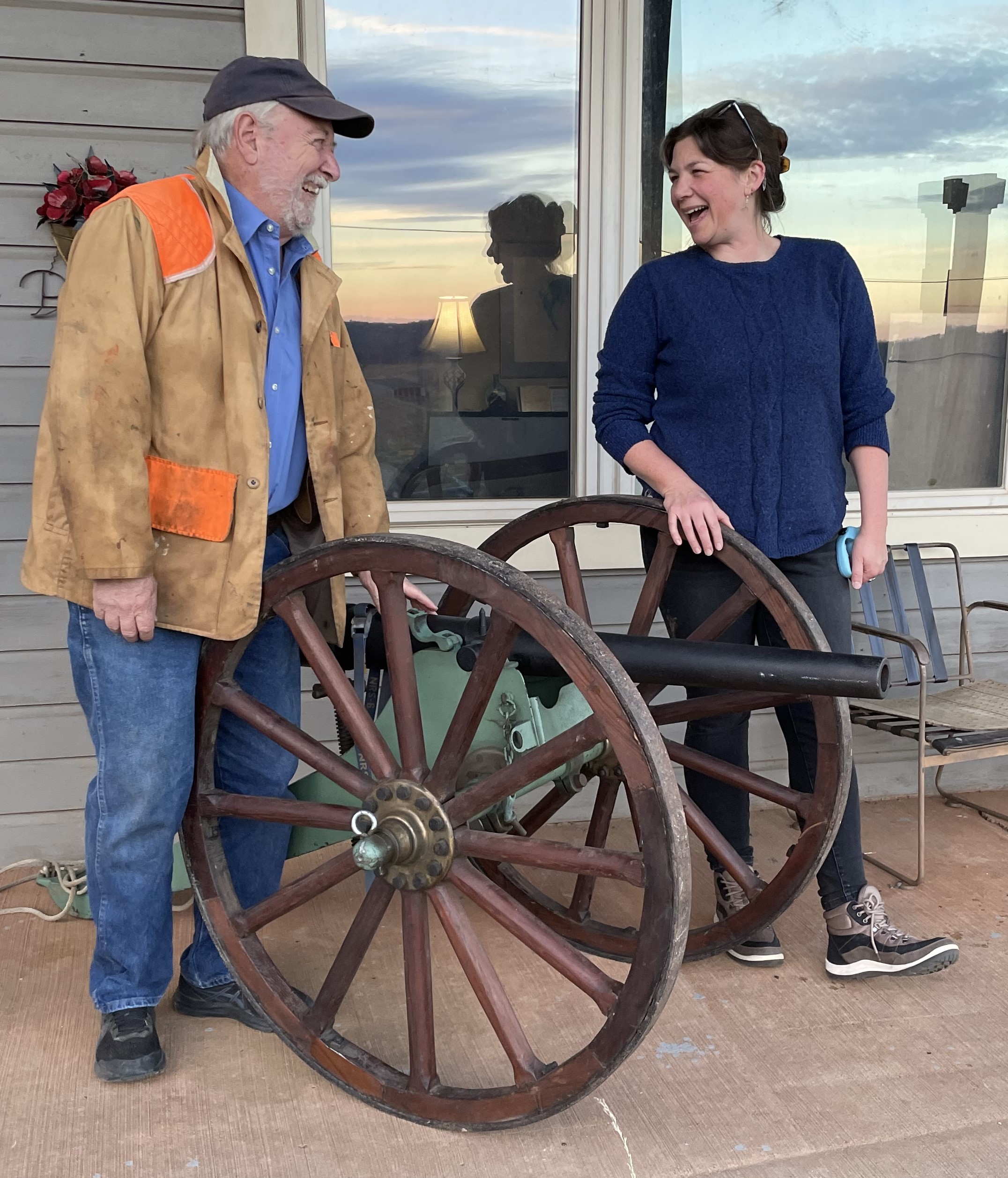
Rebecca Proffitt of ETSU visits Wess Harris in November 2022 to take a look at his Our Story Traveling Museum. Courtesy Wess Harris.
Immediately, Harris began assembling a team of experienced, expert Appalachian scholars and Union activists to assist with advising him on the assembling of the Our Story Traveling Museum. Harris gathered his team of risk takers and change makers to fine tune the Our Story Traveling Museum for a trip to ETSU. Dr. Michael Kline, nationally lauded oral historian, joined Dr. Bob Henry Baber, one of the original Soupbean Poets, to provide scholarly respectability. Charles “Boomer” Winfrey contributed to the previously unrecorded history of Coal Creek. Mary Hott brought her widely acclaimed “Devil In The Hills.” Carrie Kline joined in countless interviews and wielded a sharp editorial knife showing no mercy and expecting excellence. Long time editor Deborah Searfoss came with fresh eyes to the cutting room.
Interestingly, though emails and letters were being shared between the parties by February, 2023, Harris apparently operated without an Agreement from February 2023 until June 13, 2023. (A draft Agreement dated Feb. 21, 2023 provided by Harris was signed by him, but not Proffitt; whether or not she signed that Agreement remains unasnwered). During this time, Harris and his associates proceeded with their plans. Though pleased at the invitation, Harris remained committed to his core value of never surrendering control of the lessons he has learned from decades of collecting and curating innumerable memorabilia, artifacts, and stories of the West Virginia Union miners.
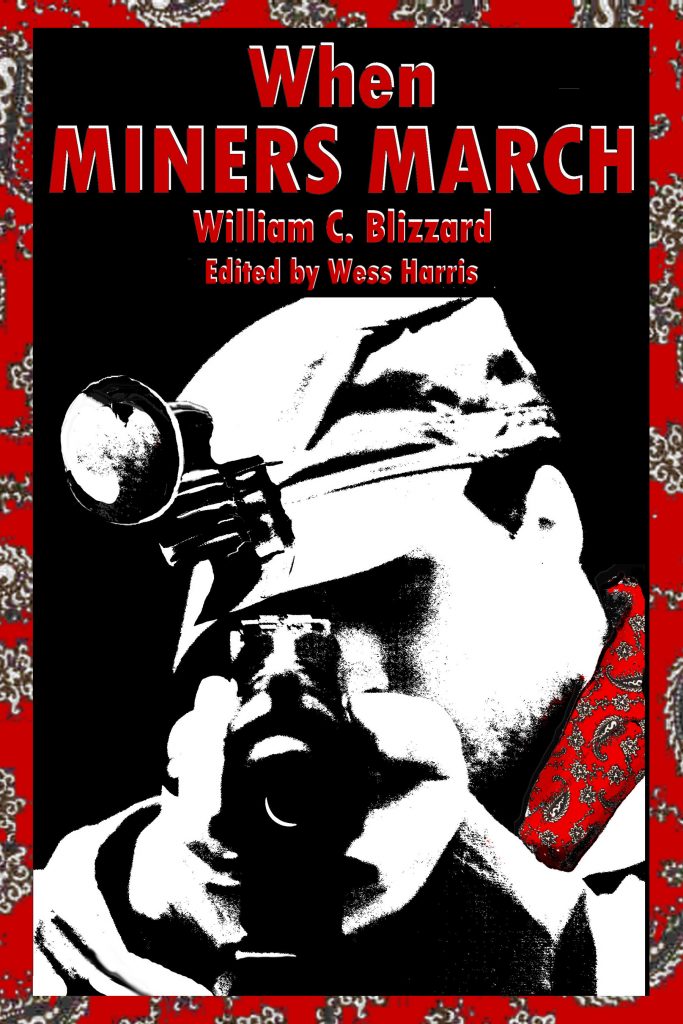
He has edited two books. His first is, “When Miners March: The Story of Coal Miners in West Virginia” by William C. Blizzard, the son of Bill Blizzard. The elder Blizzard says Harris, ” … was the chief protagonist in the drama played out around Blair Mountain” (p. i). It is the inspiration and source for Harris’s “Our Story Traveling Museum,” previously called the “When Miners March Traveling Museum.” He changed it to “Our Story Traveling Museum” because he is convinced only those involved in it – or allies willing to listen to the people who have lived it – can and are willing to tell the full truth. That is why the ETSU invitation was a welcomed opportunity. However, Harris held firm on how “Our Story” would be told and said so as clearly as possible.

There was also an even more controversial issue. In addition to “When Miners March,” in 2017 Harris published “Written in Blood: Courage and Corruption in the Appalachian War of Extraction.” It tells of the Esau scrip system for women, essentially an institutionalized practice of forced sexual servitude that was part of coal company policy, at the Whipple Company Store in Oak Hill and in mines throughout the area in a radius of at least 50 miles, says Harris, who says there are others across the state as well. Harris made it clear to Proffitt that the Esau scrip story must be told.
Exhibit shortened, then cancelled, both times without warning
That’s when the collaboration turned to contentiousness, says Harris. The truth that rape was institutionalized in parts of the coal industry simply proved too much to reveal for ETSU, argues Harris. He says, that on at least two different occasions, Proffitt opposed the use of the word “rape” in the exhibit. Proffitt refused to confirm or dispute that account.
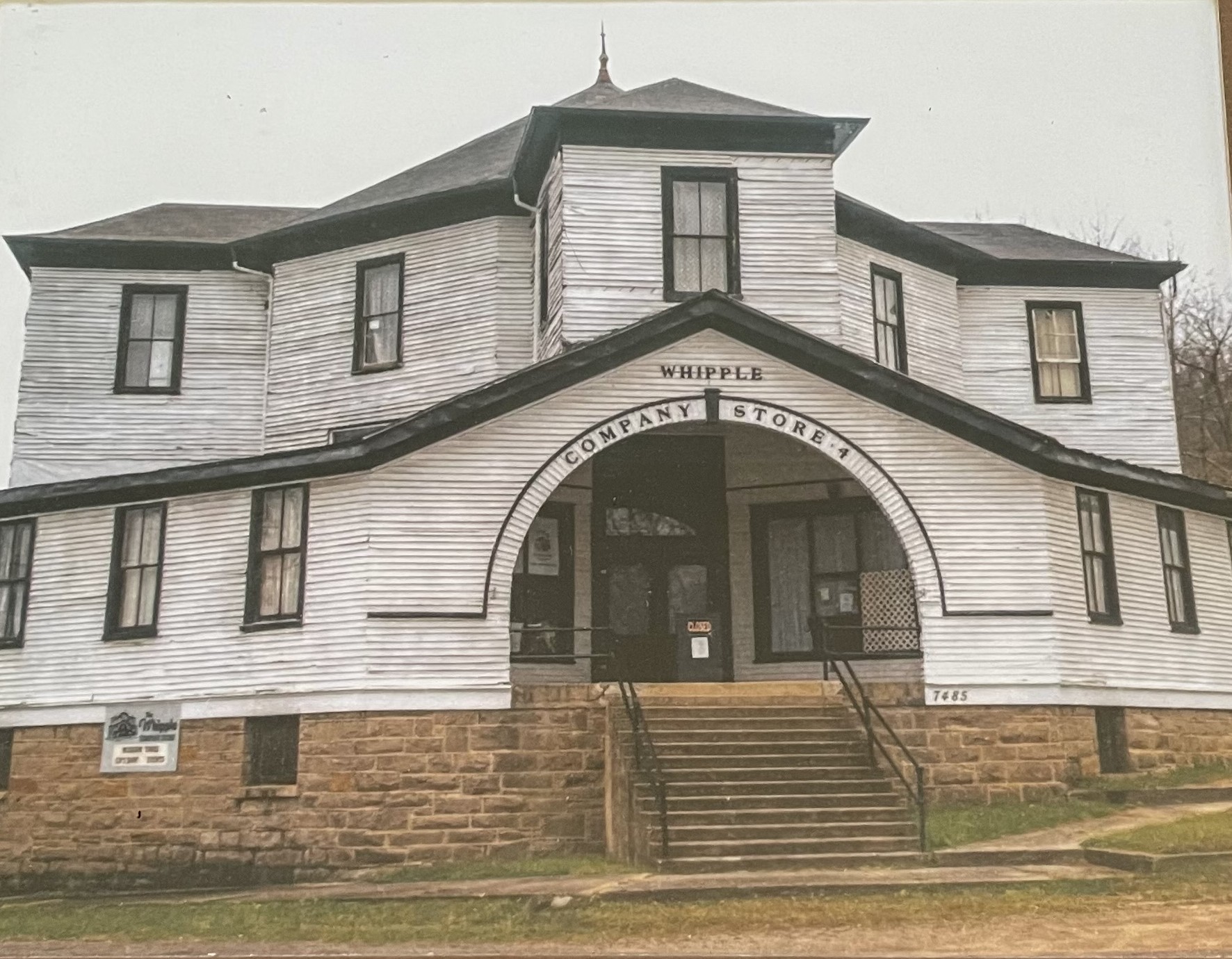
The Whipple Company Store, now privately owned and not open to the public. Courtesy Wess Harris.
Says Harris, “It seems that once they understood the truth, they regretted their decison. From the beginning there was poor and rushed communications. We had debates over editorial control.” The staff failed to honor a vital promise – to conduct an interview of an important subject, especially to the early stages of the story, as the subject passed away before Reece staff reached him. (Aware that the subject, Boomer Winfrey, was terminally ill, I contacted him and he graciously agreed to a phone interview just a few days before he died.).
There was a sudden and suprising change in June to the status in the exhibit by Reece staff from an anchor exhibit to a smaller, shortened exhibit. On June 7, 2023, without warning, Proffitt told Harris that the exhibit’s date and location had been changed. In an email, she wrote, “After careful consideration and much discussion with our administrators, campus partners, and Center staff, we recommmend this exhibition to go forward as a 12-week installation in Gallery A. We will committ to hosting the same amount of program we would have organized for an anchor exhibition, while providing a space for you to tell the story in your own words, and exactly how you’d like it to be told.” Again, Proffitt did not explain the reason for the decsion and also declined an opportunity to explain how an anchor exhibit could not accomplish the same purpose, and arguably more effectively.
Harris observes, “I shouldn’t be surprised. They are the epitome of official Appalachian scholarship. As self-anointed caretakes of Appalachia’s history, they decided to simply censor the truth about how coal miners were treated by coal operators – including the Esau scrip system of institutionalized rape.”
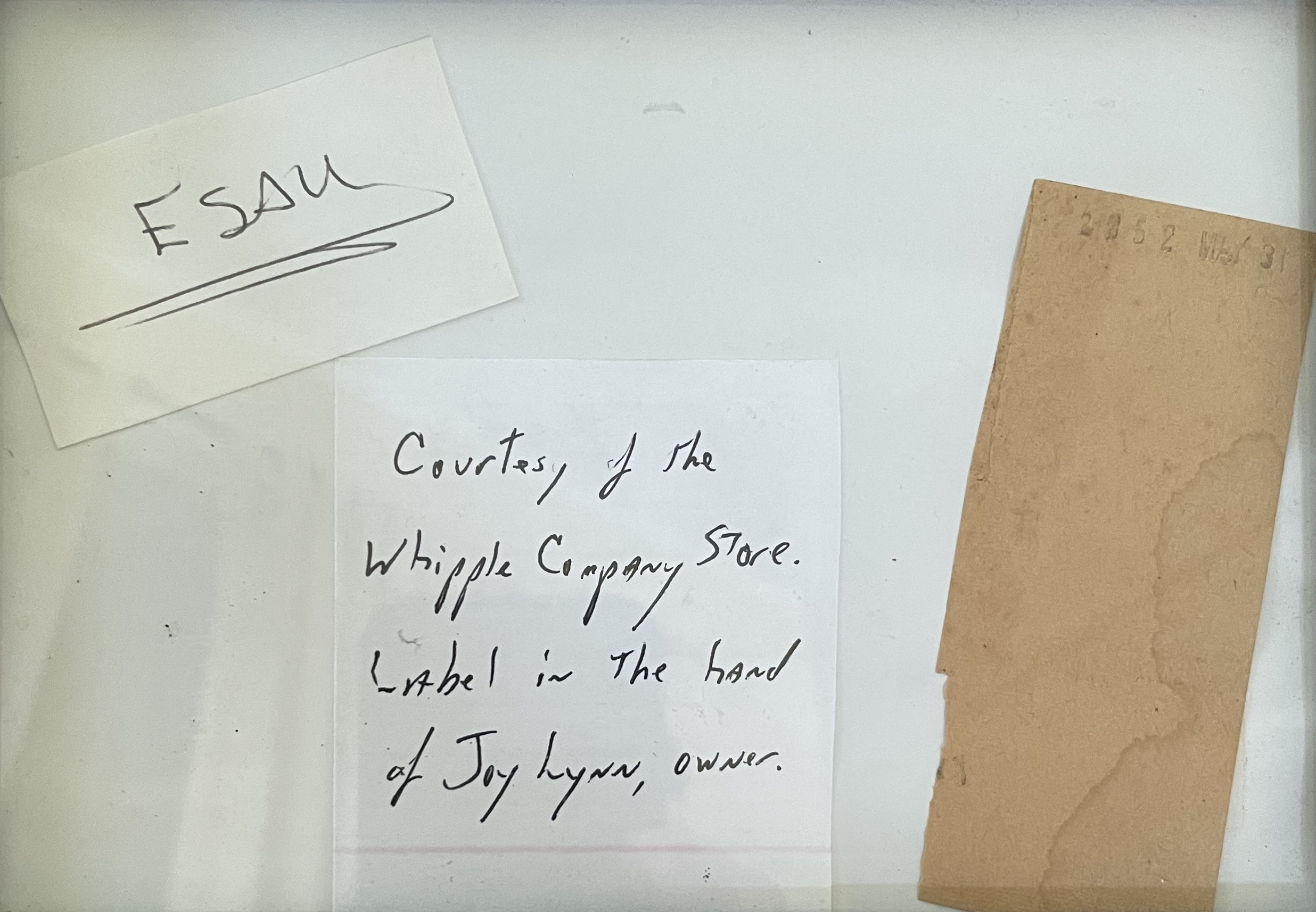
Only known Esau scrip to be on public display. Courtesy Wess Harris.
In addition, the shortening of the exhibit led to the cancellation of appearances by documentarian Barbara Kopple and Si Kahn, an American playwright, activist, author and musician. Both were to visit the university as part of the exhibit, but the date changes affected their ability to participate as planned.
Ultimately, ETSU cancelled the exhibit, again without any prior discussion or warning. In an email dated Oct. 2, 2023, Proffitt wrote, in part, “As it stands, we were prepared to work with your provided narrative, and if you were open to receiving our edits, then this project could have moved forward – exactly in line with the schedule we agreed upon in June, and with ample time for you to have another turn to approve or re-edit until all (Proffitt’s emphasis) were comfortable with the exhibit contents.”
That was how Harris learned his exhibit was cancelled – through email, the same way he had earlier learned it had been shortened and changed from an anchor exhibit.
But Proffitt wasn’t done. She continued, “Additionally, our staff and colleagues operate with integrity and professionalism, and have continued to welcome you, even though you demonstrated a lack of respect for us, both as individuals and professionals.” Neither Proffitt or Roach would reply to the basis for this characterizations of Harris.
She concluded with, “Please let me know when you will be available to come get your artifacts, preferably between October 20-27.” Ultimately, Harris picked his artifacts up on Oct. 10, 2023.

Moving on
ETSU seemed to be the perfect partner. In the end though, Harris says he has learned, “Appalachian history needs safeguarding from its self-anointed institutional caretakers. The very caretakers expected to be the truth-tellers – museums, universities, libraries, the media and more – will not fulfill their calling for fear of offending their corporate and large personal donors.”
He says he knows that his traveling museum is a hit. “People tell me that they know these vital stories have gone untold or sanitized for too long. People know that and want to see the full museum in one location.” So, he carries on, wiser and as protective as ever over the story his collection and experiences teach. He is philosophical. “More cooperation is needed if we’re to overcome censorship.” He continues, “Mediocrity is not acceptable. You get it right. There is no room for error or political correctness. Just get it right!”

1911 Scrip Machine. Courtesy Wess Harris.
He also admits he made a critical mistake. He trusted people. He shares, “First, don’t do anything without signing a contract. I’m used to the West Virginia handshake, you know, like the Bible says. ‘Let your yes be yes and your no be no.’ The way I do business is not the way people do it in academia.”
Ultimately, he has concluded, while ETSU pulled the plug, it has been right for the Our Story Traveling Museum. “If I’m going to work with you, I must be willing to work a shift with you in an underground mine and walk a contested picket line. ETSU staff don’t meet that standard. They do not understand their history.”
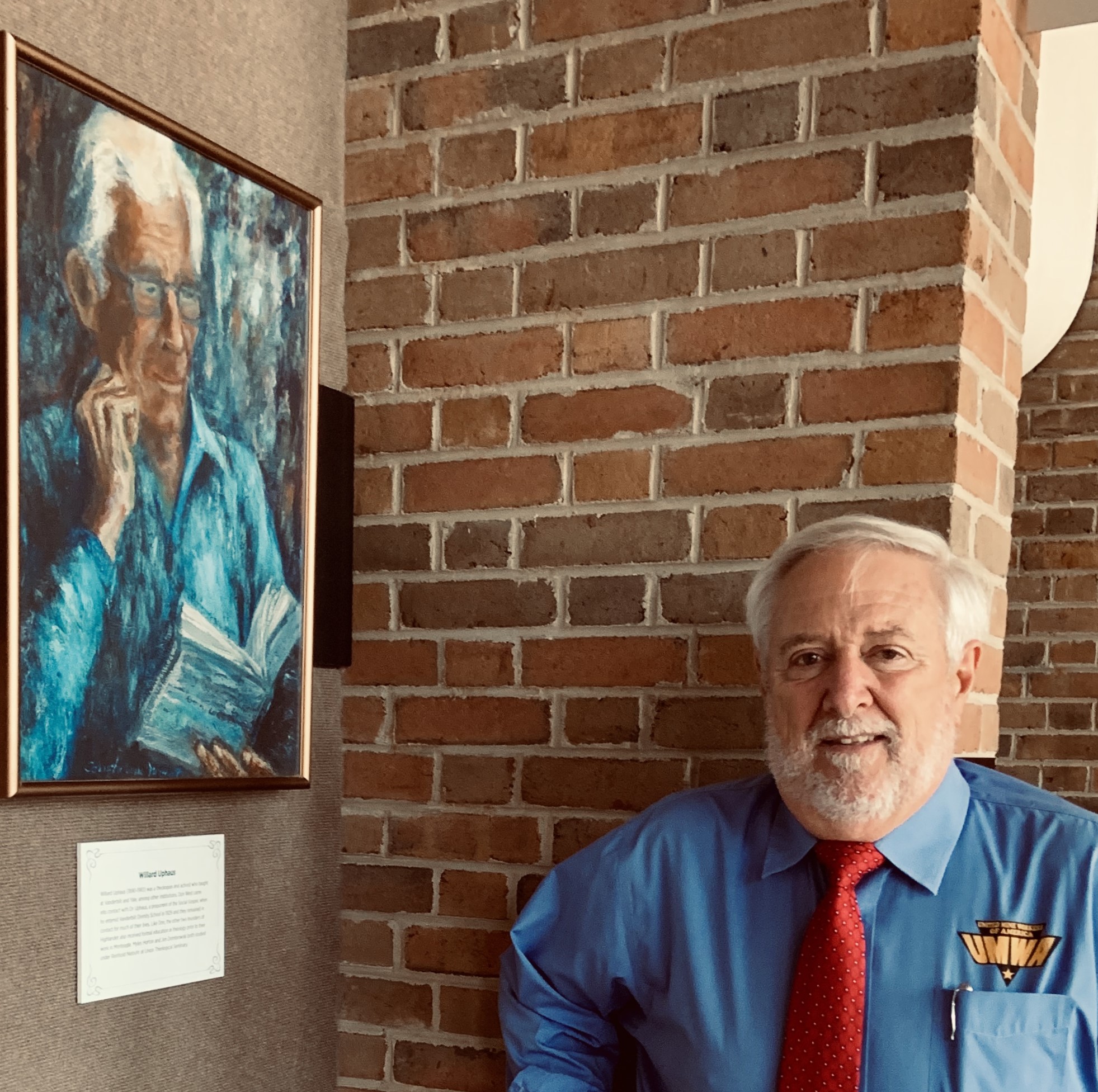
Wess Harris with a Connie West portrait of Willard Uphaus from his ‘Our Story’ collection. It is just one of dozens of portraits that would have been displayed. Photo by Nellie Blanton.
Efforts to speak with ETSU staff
I contacted ETSU numerous times to interview Proffitt or Roach for this article. They refused to answer the questions or agree to requests for an interview. Furthermore, on April 5, 2024, I sent Proffitt about eight questions with background for the reasoning of the story, copying Dr. Roach. On April 8, I called Proffitt to verify she had received my email. She denied having received it, though it never bounced back. She did offer that Roach had received it and “was passing it around the university to different people to see if I should answer the questions.” I followed up immediately with an email to Roach and Proffitt. Neither email bounced back. I sent a second one, suggesting that lacking evidence of it bouncing back, it was safe to expect that Proffitt had, indeed, received the email. On April 11, I called Roach and left a message on his answering device. I have never heard back from either individual or any other ETSU representative.
Conclusion
It would seem that the Reece team did not take to heart a letter from Appalachian Scholar and Activist Theresa L. Burris, Ph.D. In writing a contextual essay in support of the Our Story Traveling Museum, she wrote, “On the back of an envelope mailed to me on February 19, 2008, Wess Harris hand wrote, ‘Danger! Contains Ideas!’ This witty, apt warning epitomizes Wess’s character and approach to life.”
Previous Articles
Wess Harris Reveals His Unlikely Path as Curator of ‘An Incredible History that Hasn’t Been Told’ (02/27/24)
The Rest of the Story: The ‘When Miners March Traveling Museum’ by Sociologist Wess Harris (01/23/24)
The First Coal Wars and the Convict Lease System – Preserving the Teaching of ‘Boomer’ Winfrey (11/23/23)
Disclaimer
I was on the ETSU campus twice with Mr. Harris. The first time was on June 13, 2023 at the request of a mutual acquaintance. My input regarding the Exhibit was sought. I met Ms. Proffitt and others then, but only for a very brief time. The second time was on Oct. 10, 2023 when, again, I met Harris on the campus at his request as he reclaimed his collection. – MMB
© Michael M. Barrick, 2024.
 Appalachian Chronicle
[…] Who Tells Our Story? Are Self-Anointed Caretakers of Appalachian History Hiding the Truth? (04/14/24): When Appalachian history is inconveniently true, it is also conveniently ignored by the “Gatekeepers.” This account is the epitome of this failure of initiative and leadership. […]
[…] Who Tells Our Story? Are Self-Anointed Caretakers of Appalachian History Hiding the Truth?: When Appalachian history is inconveniently true, it is also conveniently ignored by the “Gatekeepers,” as happened at East Tennessee State University’s Center of Excellence for Appalachian Studies and Services (CASS). This account is the epitome of this failure of initiative and leadership by the those expected to safeguard the history of Appalachia’s people. […]
[…] Who Tells Our Story? Are Self-Anointed Caretakers of Appalachian History Hiding the Truth? […]
[…] Who Tells Our Story? Are Self-Anointed Caretakers of Appalachian History Hiding the Truth? […]