
LENOIR, N.C. – Southern Appalachia has long inspired artists, musicians and writers. Many have been self-taught.
Or have they? They do have a teacher: The earth that sustains them, that roots them and that overwhelms them with its extravagant beauty. As is often the case, great teachers inspire others to teach. Hence our region’s rich ensemble of artists.
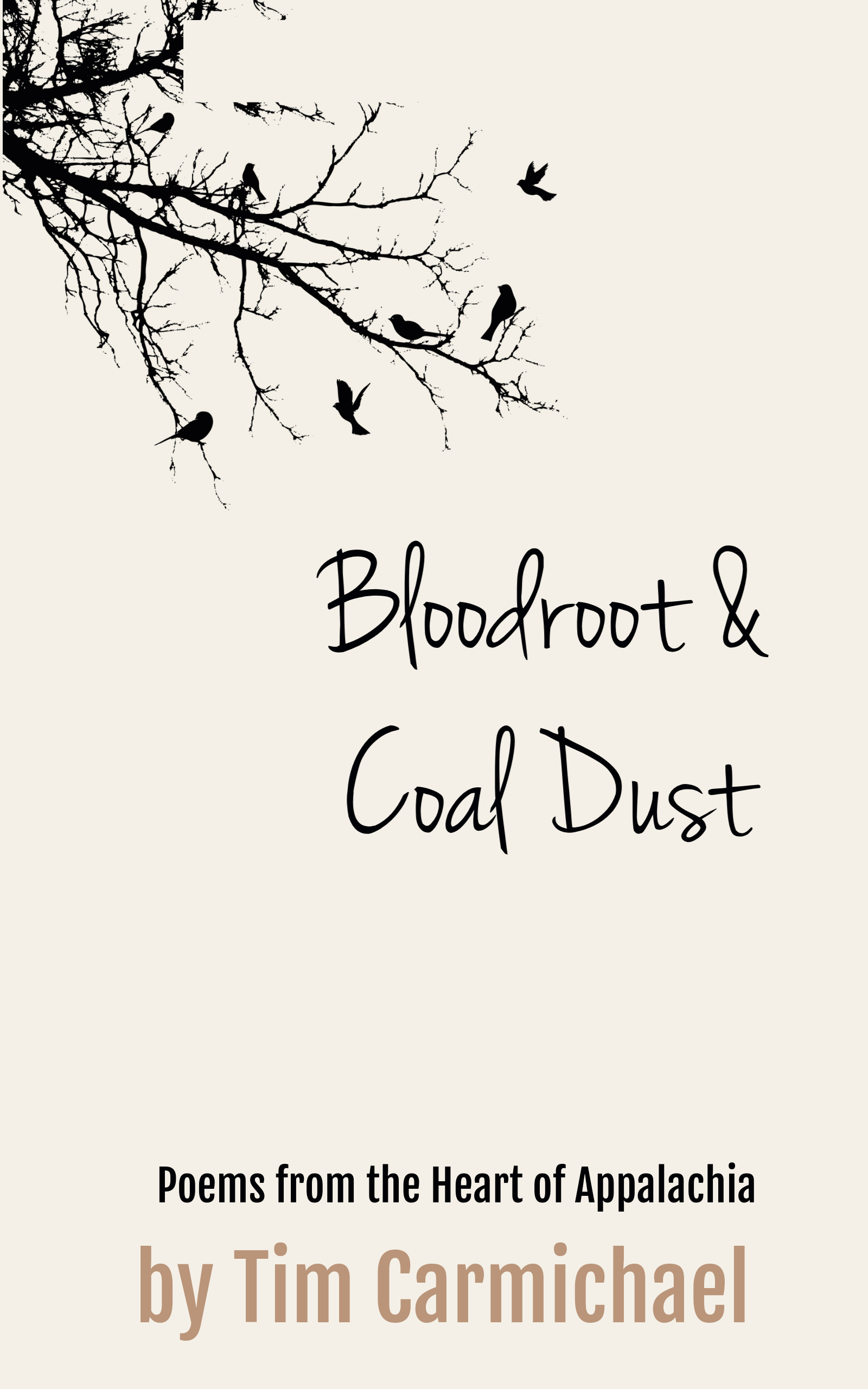
Such is the case with Tim Carmichael, a native of Western North Carolina now living and writing from East Tennessee. He has just released his first book of poetry, “Bloodroot & Coal Dust: Poems from the Heart of Appalachia.” It is a must read for anyone who enjoys sitting across the kitchen table or on the porch with a great storyteller.
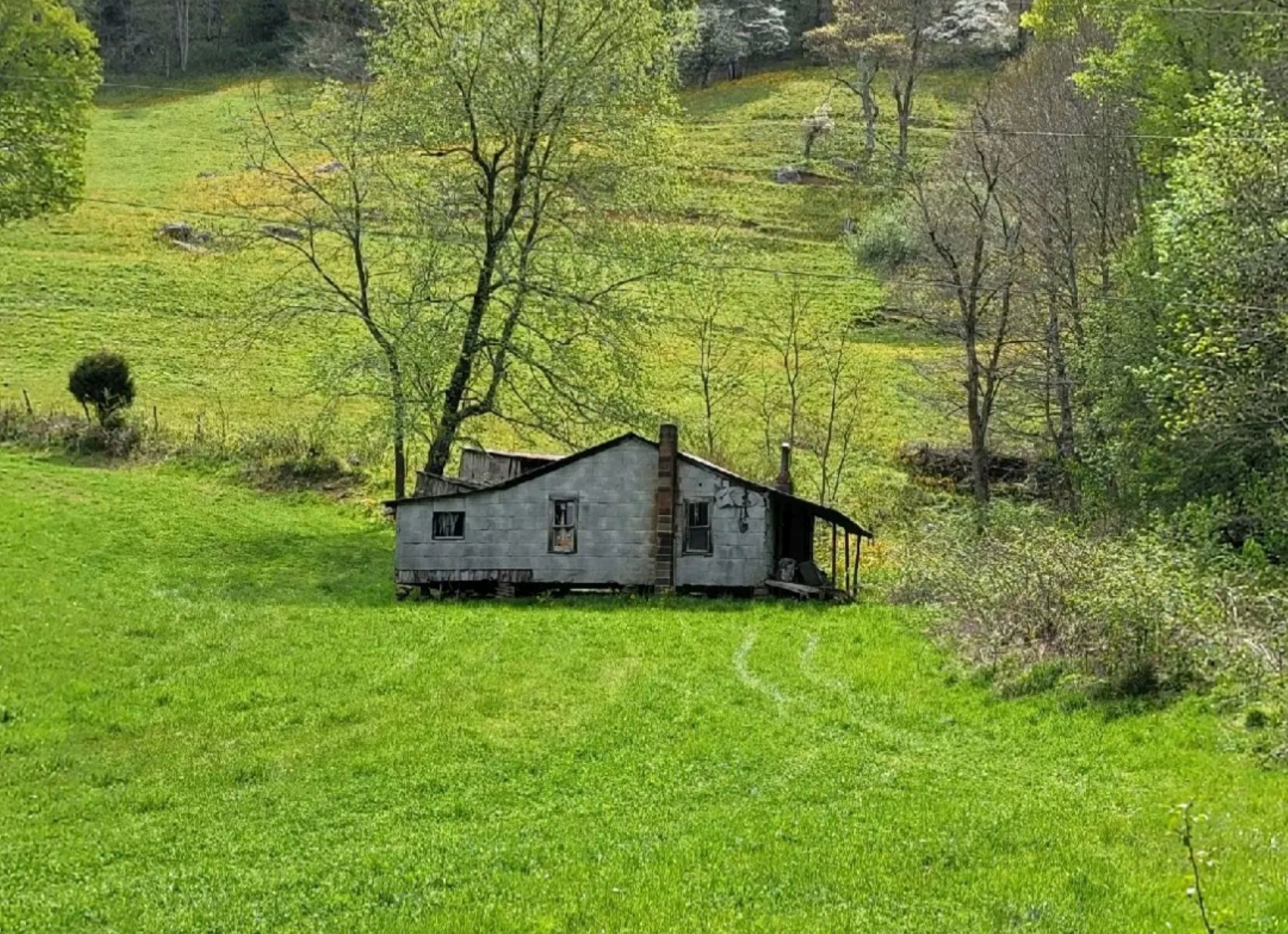
He shares, “I was born in Asheville in 1968, but I was raised in Marshall, North Carolina in a small community called Spillcorn. We lived in poverty; our family were farmers. My father was a moonshiner and mother worked in a shoe factory in Hot Springs.” He spent his first years in a tiny house. “That was the level of poverty we lived in, no running water, no bathroom and no electricity in a two-room house for six people.”

Despite or because of this hardscrabble upbringing, Carmichael’s poetry is authentic, the voices familiar. On his website, Carmichael explains, “‘Bloodroot & Coal Dust’ isn’t trying to explain Appalachia to the world. It’s just telling the truth for the ones who already know it in their bones – and maybe for the ones who want to understand it a little better.”
He continues, “If you come from the hills, or if you’ve ever felt the pull of home in your chest, this book might feel like someone sitting down beside you and saying, ‘Let me tell you a story.’ And it’s one worth hearing.”
“These poems don’t preach or pose. They remember. They reckon. And they tell the truth, the way the mountains always have – quietly and without apology.”
Poet Tim Carmichael
Indeed, a sampling of just a few poems from the roughly 80 that cover 169 pages, offers an honest, straightforward collection of poems akin to just about any conversation one hears in Appalachia. They are plain-speaking, and steeped in memories and the mysterious mountains which birthed them.
In a note at the end of the book, Carmichael writes, “These poems were not written for scholars or critics. They were written for the ones who still remember how the kitchen smelled when biscuits were pulled from a woodstove, who’ve walked fields in hand-me-down boots, who’ve sat up all night with the dying and gone to work the next morning without complaint.”

Notably, Carmichael reveals, “I have never taken a writing class, poetry just came natural to me.” Indeed it has come natural, for characteristics common to poetry fill the book. This collection of poetry could easily be used as a classroom text or discussion group. He compels the reader to respond. The clear, yet powerful titles lure the reader in, and the clever vocabulary makes it possible for the reader to participate in and paraphrase the story – a clear indication of a reader absorbed in the poem. The reader knows Carmichael’s place in the story. The poems are evergreen, relevant then, now and in the future. The call of the land is a lasting and universal experience. Carmichael’s vivid descriptions with just a few words open up the reader’s mind’s eye. His views and experiences are shared on his terms, but understood and accepted by readers of various views and backgrounds.
Ultimately, his poems appeal primarily because they evoke strong feelings. It is no accident.
These poems remind me of my own experiences or those I’ve heard from previous generations. Carmichael’s poems are succinct short stories. Straightforward, like Appalachians. Indeed, compelling story-tellers carry much with them, in particular the people who are part of their story. In his note at the end, Carmichael shares, “These voices – of farmers, miners, widows, children, dreamers – are stitched together from people I’ve known, places I’ve stood, and things I carry that don’t let go easy.”
Following is a glimpse of the tapestry of poetry stitched together in “Bloodroot & Coal Dust”:
The book begins with the title poem, “Bloodroot & Coal Dust.” Our speaker uses a nature lesson to have us ponder something larger: “They say bloodroot can heal – / stop bleeding if you cut it right. / But they say it burns / if you don’t know what you’re doing.”
“That feels about right. / Most things here / can save you or scar you, / depending how you touch them.”
Next, “A Quiet Glory” shares much to consider. Standing out, however, are two lines which underscore what Carmichael says about carrying “our” people with us is an Appalachian tradition: “We carry our dead with us – / not in grief, but in gratitude.” This line speaks not only to a tradition, but the significance of it. It displays poetic excellence in its brevity.
Another brief but powerful lesson from Nature is found in “What We Know” – “The land don’t promise easy / but it offers honest. / And around here, that’s enough.”
“How We Talk” cleverly alludes to the power of silence – “You can tell a lot by the way we pause – / between sips of coffee, / before we say someone’s name who is gone. / That kind of silence / carries a whole lot of history.”
Indeed, all the titles are captivating and clever. They include: “Things You Learn Without Asking”; “What the Firewood Knows”; “The Ones Who Stayed”; “All I Kept”; and, “Gas Station Communion.”
On the back cover, Carmichael writes, “These poems don’t preach or pose. They remember. They reckon. And they tell the truth, the way the mountains always have – quietly and without apology.”
Indeed they do. It’s certainly worth adding Carmichael’s first poetry book to your summer reading list and collection of Appalachian literature. You can learn more about the book here at Carmichael’s website. It can also be purchased on Amazon.
© Michael M. Barrick, 2025.
 The Appalachian Chronicle