
By Warren Cole Smith, President of MinistryWatch.com
The death of Charlie Kirk has caused a lot of soul searching by those on the left and the right, as it should.
Al Mohler, writing for WORLD, said, “Every generation has its own formative moments. Yesterday is now one of those days.”
That assessment is accurate. Something about Charlie Kirk captured the imagination of a generation, and the nature of his death – while undeniably tragic – is also mythic. He was at Utah Valley University to engage peacefully with those who disagreed with him. His very presence was a powerful statement that he believed facts, persuasion, logic, and reason were superior to violence. And in an ultimate irony, he was murdered while answering a question about gun violence. If someone had written such a scene into a work of fiction, no one would believe it. It would be too “on the nose.” And yet, that is the tragic reality we now face.
When I reflect on Charlie Kirk’s life and legacy, I am most struck by how much it was a work-in-progress. That conclusion may be obvious. He died a young man, at age 31. But it is an obvious conclusion that is easy to forget. After all, Kirk sprang on to the national stage at age 18, when he founded Turning Point USA. He appeared – to the untrained eye – to be fully formed as a conservative activist. Even at that young age, his rhetoric was focused and specific. “In political terms,” to use Mohler again, “he was a political prodigy.” He also had world-class fundraising and organization-building skills.
But there was one aspect of Charlie Kirk that was not fully formed when he first became a public figure. That was his Christian faith. Some accounts of Kirk’s life say he was an adult convert to Christianity. That’s not quite true. He has said publicly and repeatedly that he made a profession of faith in Christ when he was 11 years old. He has shared that he vividly remembers raising his hand during a presentation of the Gospel, committing to make Jesus Christ “the Chairman of the Board of my life.”
But it is also true that in his young adult years, including the early years of Turning Point USA, his faith did not seem his highest priority. Mohler said he first met Kirk when they were both speakers at a conference:
“Backstage, I was impressed by his gifts but turned off by his demeanor. That was during Charlie’s years of bare-fisted libertarianism and personal assertion. Back then, he saw Christianity as a huge drag on conservative progress. He was pretty clear in calling for a new young conservatism of liberty and resistance. At the time, he didn’t have a lot of use for conservative Christians, and he wasn’t subtle.”
That was my experience with Charlie, as well. Charlie and I were not friends, but we found ourselves in the same places a dozen or so times over the years. We shared the platform in 2016 at the Western Conservative Summit in Denver, and we were both members of a conservative group that met several times a year to discuss strategy, exchange best practices, and network. I vividly remember an interaction we had in 2018, when Turning Point USA was still very small. I told Charlie that his strategy might be successful in building a political juggernaut, but not at changing hearts and minds. I told him that he was in danger of “becoming what he despised” if he resorted to the nihilism and the realpolitik of the Left.
I have no illusions that my conversation had any impact on him. For one thing, that was the last time I ever saw him one-on-one. For another, a more objective reading of his life makes plain that his marriage to Erika, the birth of his two children, and his involvement in a local church in Phoenix made the difference in his life.
Whatever the proximate instruments of Charlie’s transformation, it seems to me that the overarching cause was the Holy Spirit in action. He may have become a Christian as a child, but sometime around 2020, that faith became more alive, more real, to him.
His near-permanent scowl, perhaps a young man’s attempt to be taken seriously, was replaced with a nearly perpetual smile, and regular outbursts of laughter. You could see in him joy, and compassion. He had the mind and the quick wit to bludgeon opponents, but a close look at his videos from more recent years shows someone who asks more questions than answers. Many of the videos you can find of Charlie on the Internet end with him smiling at an opponent who had just talked himself into a circle.
All of that to say this: What would Charlie Kirk have become had he lived?
Yogi Berra famously said, “Predictions are dangerous, especially predictions about the future.” I would add: “Especially predictions about a mythical future, a future that now will never be.” Would he have pivoted away from politics altogether? Would he have repented of some of his earlier utterances? These questions are, of course, impossible to answer.
But it’s important to note that Charlie Kirk himself was not silent on the matter. In a fascinating interview he gave with the Deseret News just weeks before his death, he said, “I could talk about religion all day long.” The article continued:
What animated Kirk more than my questions about his vision for Turning Point and the future of MAGA, were his digressions about his worship routine as an evangelical Christian.Kirk prioritized daily scripture study, a 10-minute “examination of the conscience” before bed and a phone-free Sabbath from nightfall on Friday to sunset on Saturday.
After penning “The MAGA Doctrine,” “The College Scam” and “Right Wing Revolution,” Kirk told me his next book was going to focus on how his followers could set aside one day out of every seven to honor God.
To reiterate: Charlie Kirk had changed. He was not the person Al Mohler and I had encountered just a few years earlier. I had concerns about Charlie and his approach in 2018. I can now say with some confidence that those concerns are outdated. They had expired. The Charlie Kirk of 2025 was not a bomb-thrower, a cultural revolutionary.
“My job every single day is actively trying to stop a revolution,” Kirk said. “This is where you have to try to point them towards ultimate purposes and towards getting back to the church, getting back to faith, getting married, having children. That is the type of conservatism that I represent, and I’m trying to paint a picture of virtue of lifting people up, not just staying angry.”
All of this makes the assassination of Charlie Kirk even more tragic, of course. What kind of man would he have become had he lived? The answer to that question is one we can now never know.
But it seems clear to me that Charlie Kirk’s assassination is the generation-defining event that Al Mohler and many others say it is. It is also clear that we have the opportunity to decide what his legacy will be. We have an opportunity to decide which Charlie Kirk we will imitate. We have the opportunity to imagine the man Charlie Kirk was becoming, and to follow in those footsteps.
We should take into account that Charlie Kirk changed, was transformed, near the end of his life, and that he himself acknowledged that transformation was a result of the power of Christ.
That’s the Charlie Kirk I didn’t know but wish I did.
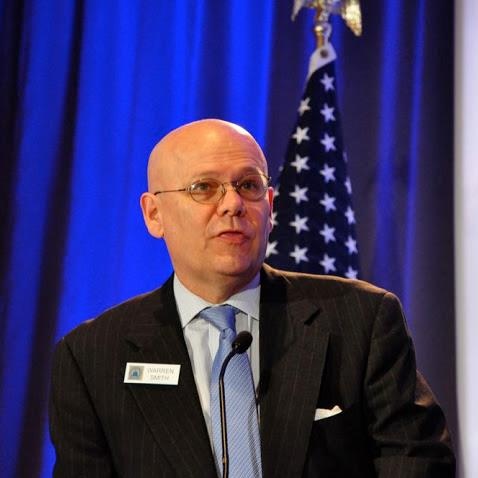
Warren Cole Smith is president of MinistryWatch.com. He has done several interviews explaining more fully the philosophy and operations of MinistryWatch.com. You can read those interviews here. Learn More About Warren Cole Smith and MinistryWatch.com
© MinistryWatch.com, 2025. Reprinted with permission.
Access to MinistryWatch content is free. However, we hope you will support our work with your prayers and financial gifts. To make a donation, click here.
 Appalachian Chronicle