
Charitable Assessment Includes Reviews of Donor Outreach, Organizational Flexibility, Resource Management and Client Services

LENOIR, N.C. – There is no disputing that we are living in tough times. Indeed, in my 70 years of living, these are indisputably the most economically challenging times that I’ve ever witnessed.
As a result, the need for charitable giving has never been higher. Nonprofit charitable organizations are in desperate need of cash and the basic necessities to provide their clients with the basics of affordable and healthy living.
The minimum wage in North Carolina and the United States is a mere $7.25 per hour. For those fortunate enough to work a full 40-hour week, that is just $290 a week on which to live. That is $15,080 a year if one works every week of the year. That is less than half of the federal poverty level for a family of four, which is $33,000.
The number of homeless people continues to increase in our town and across the nation. Families struggle to find affordable housing. The cost of filling up the gas tank in our cars is astronomical. Food prices are skyrocketing. Food and healthcare deserts are on the rise; many towns simply don’t have decent grocery stores or medical facilities. The rise of “dollar stores” points to a growing population that are doing all they can to cobble together enough money to buy diapers and feed their children.
Meanwhile, the minimum wage in North Carolina and the United States is a mere $7.25 per hour. For those fortunate enough to work a full 40-hour week, that is just $290 a week on which to live. That is $15,080 a year if one works every week of the year. That is less than half of the federal poverty level for a family of four, which is $33,000. Many people don’t have full time jobs, and so are living on less.
Many people don’t have full time jobs, and so are living on less. The average rent for an apartment or home in North Carolina is at minimum $1,100 a month; it is usually higher. How does one buy food or clothing when rent is at least $13,200 a year – 88 percent of a full-time job on a minimum wage?
The average rent for an apartment or home in North Carolina is at minimum $1,100 a month; it is usually higher. How does one buy food or clothing when rent is at least $13,200 a year – 88 percent of a full-time job on a minimum wage?
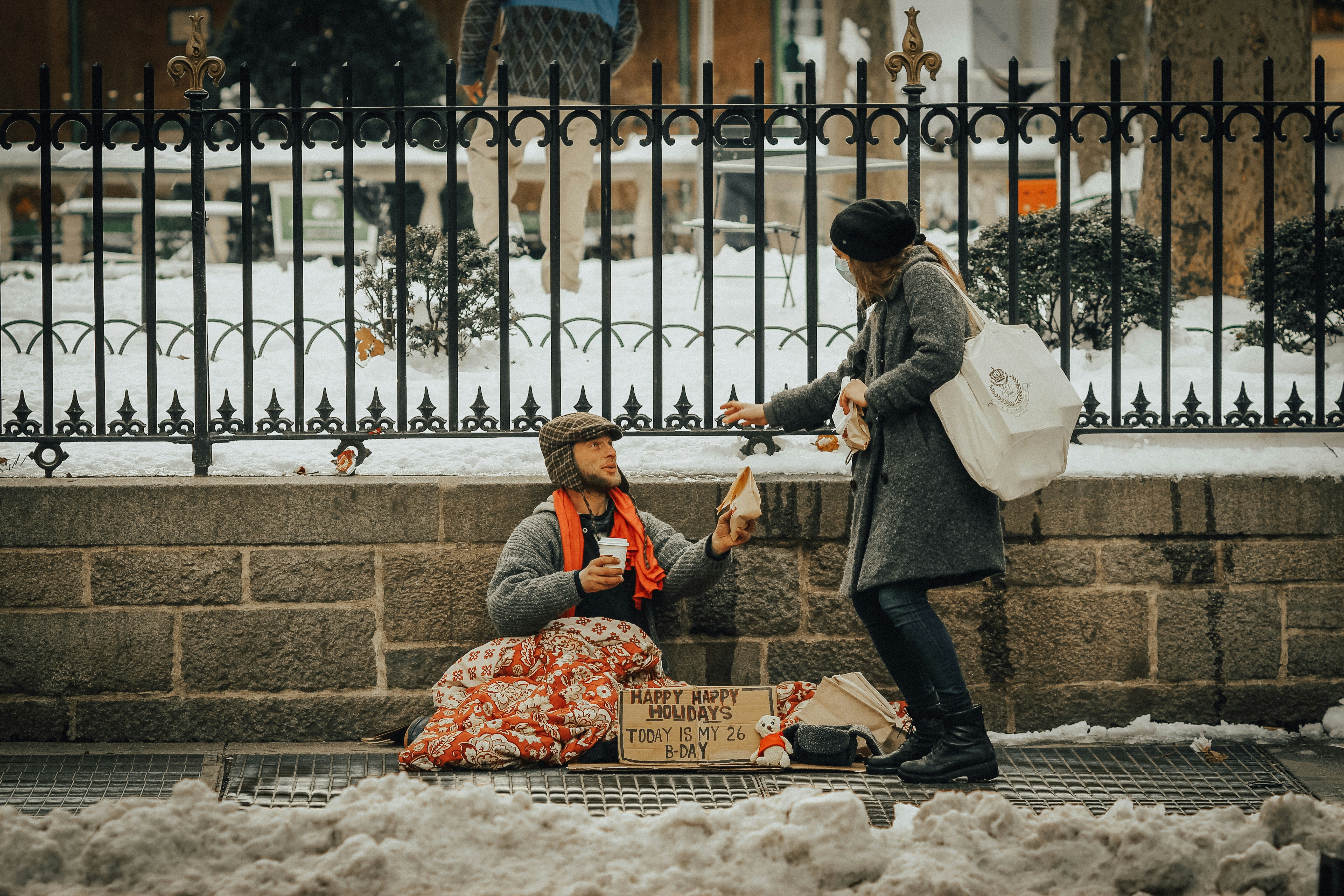
The answer? They can’t without full community support. It is required of us to shine the light upon those in need; but also, upon those helping them through nonprofits and the donors that support the nonprofits.
Preferential Concern for the Poor and Vulnerable Guides Our Work
From the moment we started the Appalachian Chronicle, we have had one purpose – to demonstrate a preferential concern for the poor and vulnerable through writing and community engagement. We are a Social Enterprise entity, simply meaning we put public service ahead of profit. We are not a nonprofit, though we do not bring in any revenue.
My experience is that the best way to see who the poor and vulnerable populations are in a community, and how they are being served, is to seek out the nonprofits helping them. I am outcome based. I am seeking to discover if clients are being served efficiently according to the stated charitable purpose of the organization.
Donor Outreach, Leadership Flexibility, Resource Management and Client Services
In the end, what we want to be able to report is how a nonprofit does at donor outreach advocacy; executive leadership and flexibility; resource management; and, client services.
Being outcome based doesn’t mean only that an organization has filled out the proper paperwork; how is it impacting the lives of the people it seeks to serve? That is far more difficult to measure. It means demonstrating patience and observing. If I observe or encounter people that are changed, that demonstrate hope and love for those serving them, I have a “metric” of success that can’t be quantified, but neither can it be denied!
How we care for each other reveals who we are as a community. A nonprofit has to take an approach that meets their clients where they are and that responds as uniquely as every person being helped. Often a Spirit of Reciprocity is cultivated, leading to ripples of kindness.
Yes, donors must be confident their money is making the difference they expect it to make for nonprofits to operate. So, while work and the questions we ask are not new to me, something is. Needs today are so widespread that as I cover the nonprofits in our region, I can’t limit myself to proper forms and documentation. I need to sit down to see and hear, from those giving and receiving, what they are experiencing every day.
We live in a time when those in the grassroots are having to improvise. And they are succeeding, by any number of measures. Having reported form Haiti and communities in Appalachia, where resources may or may not be available for emergencies or abject poverty, I can report that people help one another.
So, yes, the questions must be asked of nonprofits. They help an organization be prepared, to be efficient. Sometimes though – perhaps more often than not – someone has to deviate from the plan. Time and circumstances may simply demand it.
In the end, there is much to consider as we look at those being served by nonprofits, those doing the work, and those underwriting it. We’ll do our best to listen to all voices so that the goal of learning the best practices from one another will be accomplished.
© Michael M. Barrick, 2026; ‘Give’ Photo by Matt Baker on Unsplash; ‘Street’ Photo by Jon Tyson on Unsplash
 Appalachian Chronicle