
Warning: This article contains graphic descriptions about victims of motor vehicle accidents.
LENOIR, N.C. – Yesterday, while running a short errand from our home to downtown, I barely avoided three drivers that, if they had hit my car, would have seriously injured me or them. Two near misses were by the same Dominoes Pizza driver, who zipped out of their parking lot on Hibriten Drive directly in front of me. She continued on to the stoplight and turned right on red without stopping in front of oncoming traffic on Wilkesboro Blvd. Her destination? The SECU across the road. As I left the ATM, she came zipping around the parking lot, only to bust that intersection as she headed back to the store.
I went in to the store to complain and the manager immediately adopted an attitude as if my complaining was the problem. I simply said that nothing good was going to come out of the driver’s actions (and felt compelled to comment on the quality of their cardboard pizzas).
I also had a close call in the parking lot where the O’Reilly Auto Parts store is located. Parking lots are notoriously dangerous because there is generally no clear right-of-way. It likely would have been only a fender-bender. Yet, even that is dangerous, as there is no way to know if the other driver will be reasonable and exchange insurance information or jump out with a gun.
The worst incident happened just as I was approaching the red light at the Crossroads from Wilkesboro Boulevard. I was in the right lane and a driver in the left lane suddenly attempted to cut in front of me so that she could cross over to the merging lane that leads onto Blowing Rock Blvd.
I had to panic stop. Her car was halfway into my lane. Had I not stopped, I would have t-boned her passenger door, meaning that the small child sitting in the front seat would almost certainly have been seriously injured if I had hit that door.
I looked at the driver. She was on her phone. Naturally, she acted as if it was my fault, laying on the horn, even though she had me partially blocked. I just waited for the light to turn green. I wasn’t trusting her to not hit my car.
Sadly, this is all too common. Indeed, the number of drivers talking on the phone is alarming. Yet, in North Carolina, it is not illegal to talk on a phone while driving according to § 20-137.4A. That law merely makes it illegal to use a mobile phone for texting or emailing.
That has to change. There are too many drivers on the road for this nonsense. Distracted driving kills.
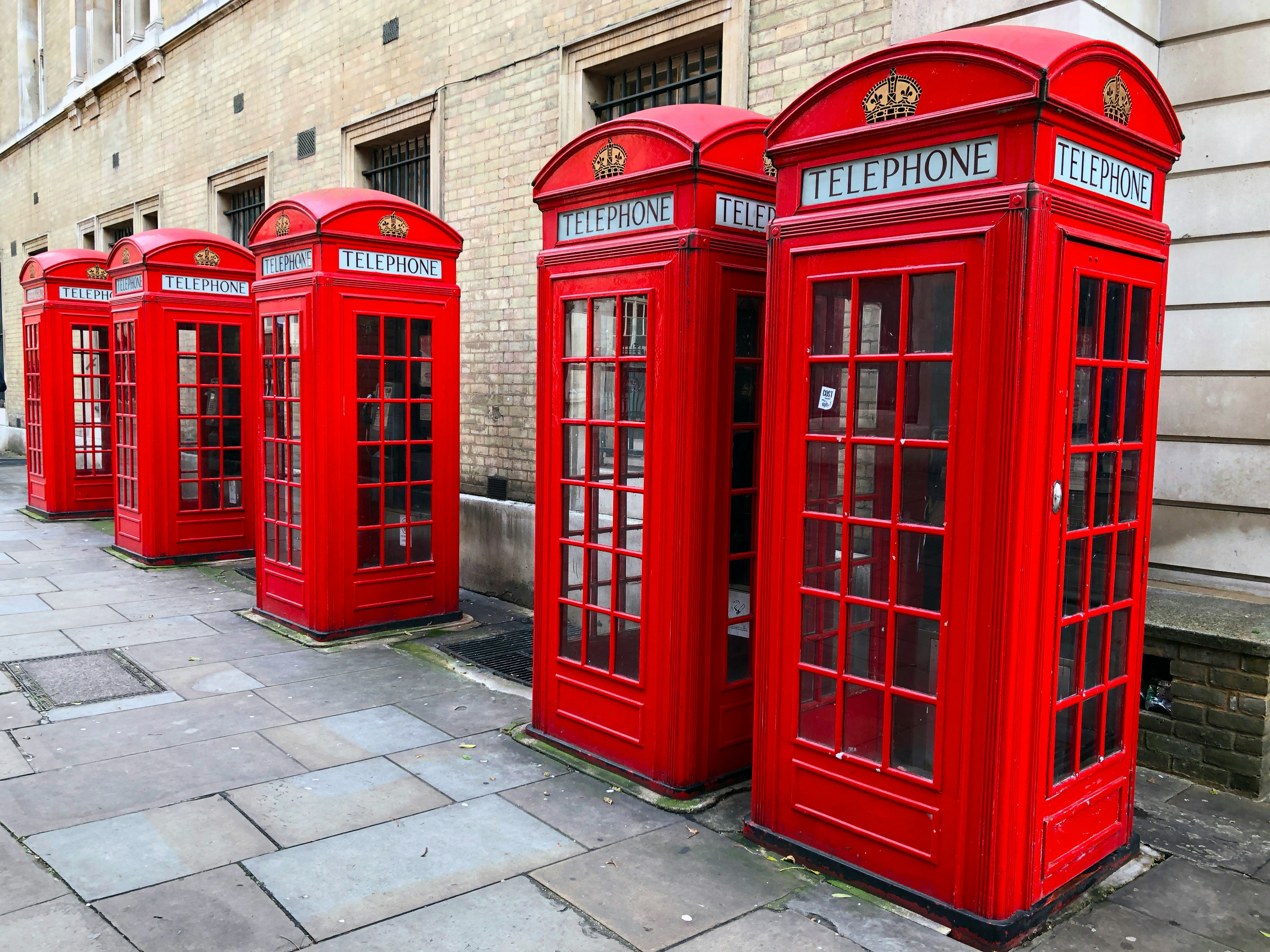
So, if you are one of those people that thinks your car is a rolling phone booth, it’s my bet you’ve never been in a serious auto accident. So allow me to describe to you what can happen when you are not paying attention.
On August 26, 1974, I was on my first day of work at the Charlotte Ambulance Service as an EMT. About 3 in the afternoon, my partner and I were dispatched to an auto accident on the outskirts of town, near Independence High School. I had gotten my EMT certificate while still in high school; on this day, I was just three months removed from my high school graduation. I was 18. I had volunteered as an EMT in a rural county in my home of West Virginia for several months before moving to Charlotte. We had a few calls, but nothing truly traumatic.
So, I was not ready for what I witnessed that first day on the job in Charlotte. When we arrived on the scene, there was a Volkswagen in a field. It had four girls in it – just a year younger than me. It was sitting on its tires. But, the roof had been ripped off.
A drunk driver, coming from the other direction, had swerved into their lane. The girl driving the VW swerved out of her lane to avoid the collision and in the process, turned sideways, went airborne and clipped a telephone pole, landing in the field.
When my partner and I reached the VW, the first thing I saw was the decapitated driver. Her head was on the passenger’s lap. That passenger was also dead from multiple injuries. Blood and metal was everywhere. In the backseat, one of the other girls was dying. And she knew it. They were trapped. We did not have the equipment to extract her, so we tended to her as best we could while waiting for the rescue squad to arrive with their equipment that could free them form the wreckage. Helicopters from news stations were hovering overhead. Their friends following them out of school were in the field, hysterical. She kept asking, “Am I dying?” I was not prepared to answer that question. We just did what we could.
The fourth girl was also critically injured; she was in shock. My partner continued to tend to the dying girl. I attended to the fourth. In time – I don’t know how long – we finally extracted her. We placed her on the stretcher. And though the third girl had died, we put her on a portable stretcher on the bench seat.
At that time, before we became paramedics, our primary strategy at that point was to simply drive like hell to the hospital, which my partner did as I attempted to stop the bleeding in the surviving girl. We got her to the hospital alive, but she died in surgery.
Four young lives cut short by a drunk driver, who by the way walked away from the wreck, though in a concussion-induced daze that had him wandering around the field. He had no idea what he had done.
This type of scene became too common during my years there. Another one, on Thomas Avenue near downtown was surprisingly deadly, as it was a narrow neighborhood street. A drunk driver hit a car full of teenage boys. The car was upside down. As I knelt down to assess the situation, I was shocked to see a severed head staring at me; the driver had been decapitated. Extraction was quicker this time, but again we had to quickly triage the situation to see who we could help. The person behind him was also dead. So, we went to the passenger side. They had survived, but barely. We carefully extracted the most seriously injured. Our backup arrived and attended to the other victim. Despite our best efforts with our patient, he died in route to the hospital. He, too, knew what was coming. His last words as he looked up at me were, “I’m dying.”
Had I not been driving defensively yesterday, that young girl in the front seat may have ended up saying the same. The same is true with anyone the Dominoes driver would have collided with.
Cars weigh thousands of pounds. No phone call is worth killing yourself or others. Even survival is horrid. Recovering from critical injuries is a strain on the whole family. And, the aggravation of dealing with heartless insurance companies literally adds insult to injury.
This is also personal. In our 44 years of marriage. Sarah has been a victim in several accidents, none her fault. Our son, who had just turned five, was nearly killed when a van driven by a Hickory Printing employee busted a stop sign and totaled the car Sarah was driving. The impact was so great that it ripped the seat belt right out of its frame. If not for a quick response by Dr. Steve Harlan, who witnessed the accident while jogging and the brilliant work of Dr. Peter Bradshaw, a surgeon at Frye Regional Medical Center, our son would likely have died. Sarah was injured as well, suffering a concussion and various other “minor” injuries.
Then, in 2001, Sarah was driving north on US 321 near Granite Falls when a driver had a medical emergency and lost consciousness, causing his car to suddenly cross the grass median directly in front of Sarah. She t-boned his vehicle. He died, and his wife and granddaughter were seriously injured. Obviously, that was not caused by distracted driving, and was a horrid tragedy for his family. Still, when we got to the scene after learning of the accident, our son ran to the ambulance to see his mother on a stretcher, her right foot barely hanging on. She had multiple injuries. Again, a brilliant surgeon at Frye Regional, Dr. Robert Lilgeberg, saved her foot, but she was in a cast for months. To say it disrupted our lives for a long time is an understatement. In fact, Sarah still suffers from pain caused by that accident. While it was unavoidable by both drivers, it serves as a perfect illustration as to what happens if you’re talking on a phone and hit steel against steel at 55 miles per hour.
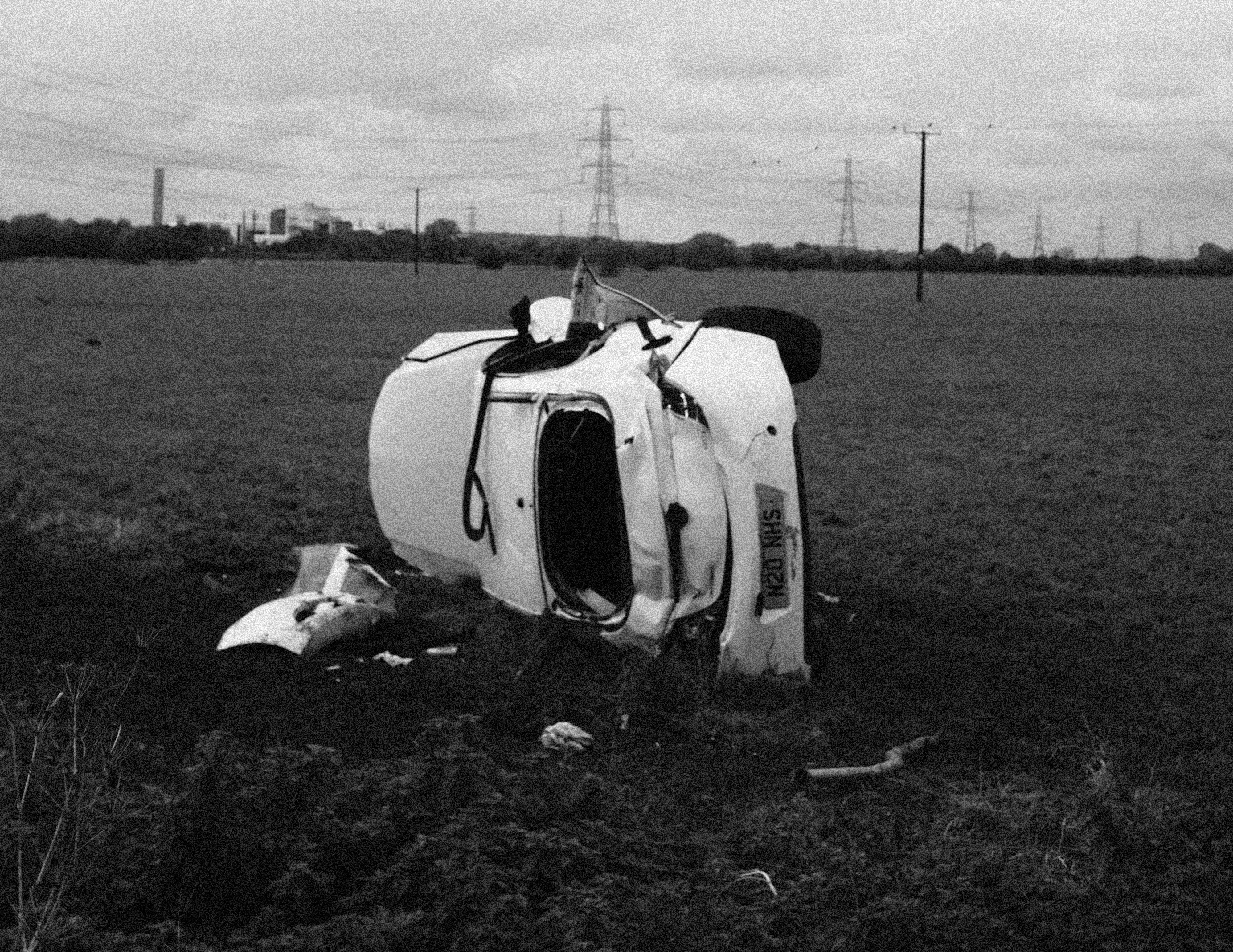
Another accident a few years ago in Hudson was caused by a man talking on a phone. He crashed into the back of Sarah’s car as she sat at the red light. He attempted to leave the scene of the accident, but Sarah’s quick phone call to me and the Hudson Police Department prevented him from leaving. Amazingly, he argued with me about not leaving the scene before the police arrived, admitting he was late for a meeting in Charlotte and simply had to go. Let’s say that I firmly reminded him that leaving the scene was a crime and more to the point, I wasn’t going to allow him to leave after he had injured my wife and wrecked our car. His callousness threw me into a rage. Wouldn’t it do the same to you? I was ready to fight or otherwise restrain him, even if it meant I might get arrested or get my butt whipped.
Another time about 20 years ago, when I was driving through Rhodhiss with Sarah as the passenger, a driver busted a stop sign and hit the driver’s side front, deploying the air bags. Again, Sarah had to be transported by an ambulance to the hospital. The cause of that wreck? The mom driving the other car was eating fast food, as were her two children. She missed a warning of a “Stop Ahead” sign and then the stop sign itself. Food and spilled drinks were scattered throughout her totaled vehicle. It could have been worse for them. Had she not hit us, she would have gone flying into a field and maybe would have killed them all.
Cars weigh thousands of pounds. No phone call or other distraction is worth killing yourself or others. Even survival is horrid. Recovering from critical injuries is a strain on the whole family. And, the aggravation of dealing with heartless insurance companies literally adds insult to injury.
So, if you drive, do your community a favor. Quit treating your car as a rolling phone booth. And, if you are a member of the North Carolina General Assembly, please amend the law to disallow drivers from talking on a phone while driving, and ensure severe penalties for those that don’t.
I’m 68 years old. I know anything could take me at any time. However, based on how people drive today, I believe it is almost certain that a car accident will take my life before any illness will.
Finally, to the woman who cut me off with her child in the front seat, I will say that I was quite angry with you yesterday. Not because of what you could have done to me, but because you don’t care enough about your own child’s life; talking on the phone was your priority. Believe me, if you keep that up, one day a paramedic is going to be hauling someone to the hospital who says their last words on earth to a stranger trying to save their life.
Postscript: This call for banning the use of phones while driving also applies to hands-free devices, because while your eyes might be on the road, your mind is not.
© Michael M. Barrick, 2024. Phone booths photo by Nick Fewingson Unsplash; Auto accident photo by Robin Battisonon Unsplash
 Appalachian Chronicle
Thankfully, you’ve survived — and I wish I didn’t hear in my head “so far.”
This should be required reading for everyone getting or renewing a driver’s license.
Powerful. Necessary. Thanks.
Sent from my iPhone
<
div dir=”ltr”>
<
blockquote type=”cite”>