CLARKSBURG, W.Va. – On May 1, Pope Leo XIV appointed Evelio Menjivar-Ayala to be the tenth bishop of the Diocese of Wheeling-Charleston, which includes the entire state of West Virginia. He will begin his season of service to the people of West Virginia on July 2.
Bishop Menjivar-Ayala’s immigrant experience will be at the heart of his ministry in the Mountain State, says Fr. Alan Eddington, a retired priest from the Diocese of Wheeling-Charleston.
When first contacted after the announcement was made on May 1, Eddington responded, “Wow! What Pope Leo has done is truly a remarkable move, in my opinion! To begin with, not only Catholics, but the entire populace of West Virginia, are about to experience a church leader deeply rooted in and driven by compassion. I don’t know where he stands theologically, but frankly, I don’t care. I feel he has the best potential for bringing true, meaningful pastoral care to the Mountain State, something that has been in a greater ‘drought’ in the Diocese than the most extreme drought gripping the southeastern portion of the United States! To make a long story short, I feel a powerful prophet has been assigned to pastor our beloved Mountaineers!”
He adds, “How this will pan out, I don’t know. Right now, however, I am excited and extremely hopeful, more so than I’ve been in ages!”
Fr. Alan Eddington
Eddington continues, “This is a radical shift from what I’m used to. I’m astonished now in a very very good way. I have great hopes for this appointment, not only for West Virginia but the larger direction of the Catholic Church across the country.” Asked how it is different he says, “I am used to bishops being appointed in the United States from a small core of conservative, politically safe group of cardinals, rubber-stamped by the Vatican. It is a ‘Business as Usual’ approach – ‘don’t make any waves’ type of leadership. That’s what I’ve been used to.” Indeed argues Eddington, Bishop Brennan, who Bishop Menjivar-Ayala is replacing, has been, “An old safe quiet no wave-making appointment.”
Eddington asserts, “It is Bishop Menjivar-Ayala’s immigrant experience that caught the eye of the Vatican, which is what motivated them to assign him to minister in the Diocese of Wheeling-Charleston, which historically has been made up of immigrant Catholics.”
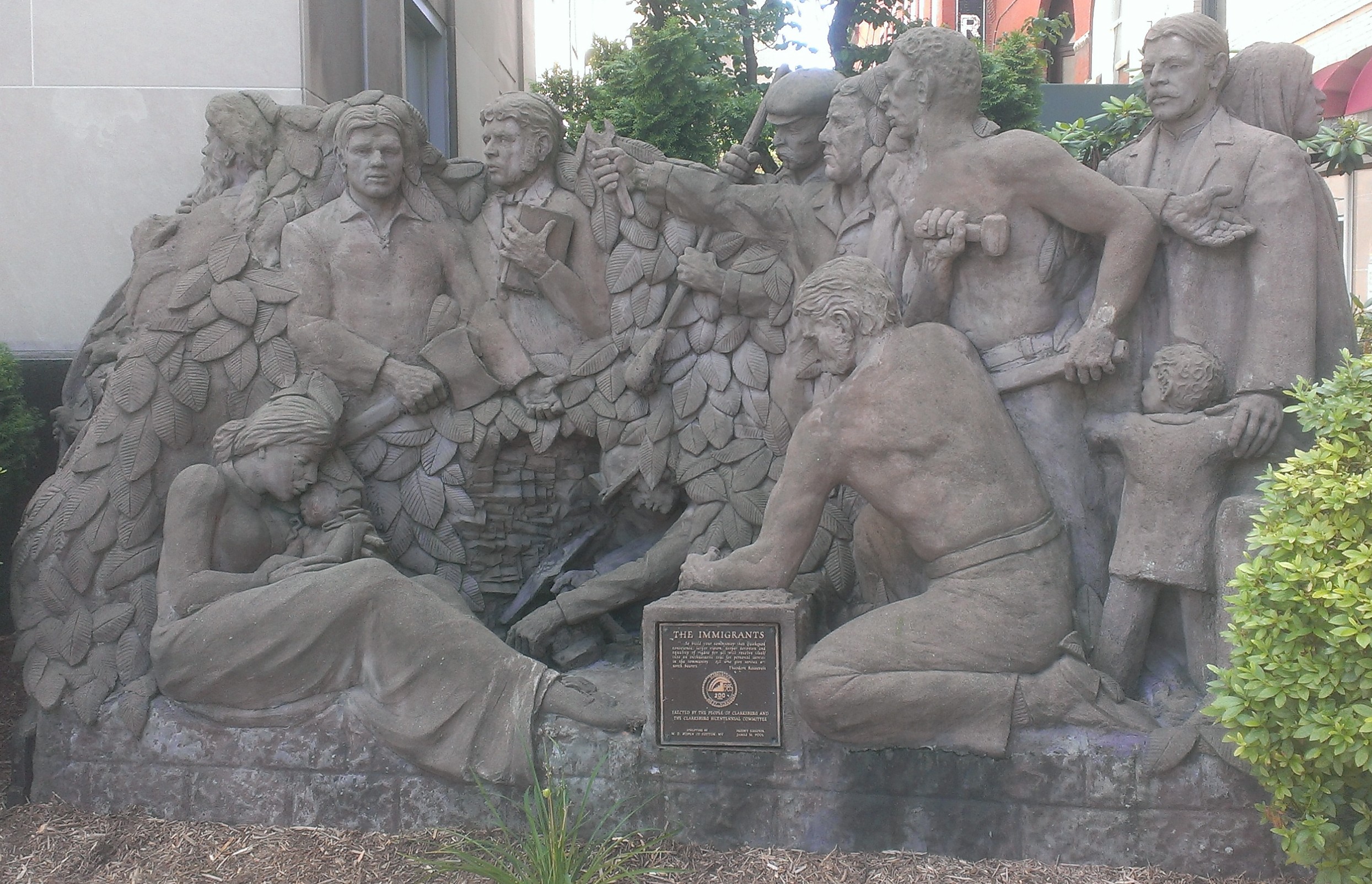
A statue dedicated to the contributions of immigrants on the Court House square in Clarksburg, W.Va.
Indeed, just weeks before being assigned as West Virginia’s bishop, Menjivar-Ayala wrote a forceful defense of immigrants in the National Catholic Reporter. “To those of you who are silent or think this does not involve you, to those of you who are not troubled by this — or worse, who applaud it — particularly those who are Catholic, I ask you: Do you not see the suffering of your neighbors? Do you not realize the pain and misery and very real fear and anxiety these unjust government operations and policies are causing? Is your conscience not disturbed? How can you stay quiet? In the final teaching of his public ministry, Jesus warned that we will be judged on how we respond to others in distress (Mt 25:41-46).”
The key element in this appointment is that is he an immigrant and the pastor of a state of immigrants … Catholicism in West Virginia in the beginning was very definite immigrant. Now the chief pastor has his roots as an undocumented immigrant! … Anywhere you see pockets of Catholicism, all are rooted in immigration. The pockets that are growing are immigrants from Central and South America. I can see the thrill that must be going through their communities that a bishop is coming in that looks like them.
Fr. Alan Eddington
This is why Eddington says, “The key element in this appointment is that is he an immigrant and the pastor of a state of immigrants. Look at Clarksburg.” While assigned to a parish there in the early 1970s, Eddington recalls parishes and missions as enclaves for Italians, Ukrainians, Poles and others. “These were all immigrant communities. Catholicism in West Virginia in the beginning was very definite immigrant. Now the chief pastor has his roots as an undocumented immigrant!”
He continues, “Historically, Catholicism in West Virginia has been, to a great extent, a face of immigration. It was the migration from Southern and Eastern Europe to West Virginia that brought Catholicism there. They were the labor force for the coal fields, they developed glass factories in North Central West Virginia, and worked in the industrial Northern Panhandle along the Ohio River. Anywhere you see pockets of Catholicism, all are rooted in immigration. The pockets that are growing are immigrants from Central and South America. I can see the thrill that must be going through their communities that a bishop is coming in that looks like them.”
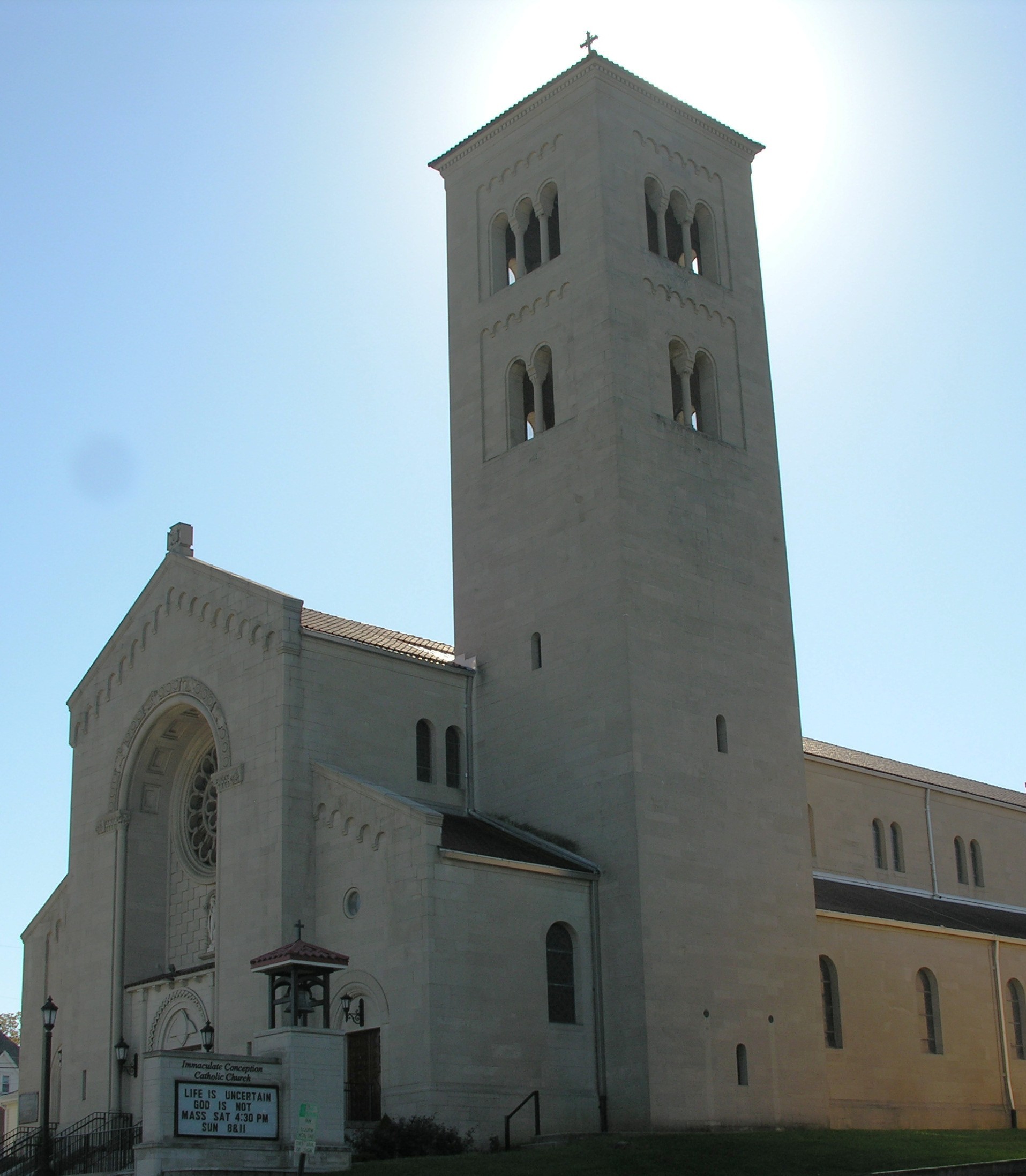
Immaculate Conception Catholic Church in Clarksburg, W.Va.
Eddington offers other examples of how Bishop Menjivar-Ayala can make a difference in practical ways for clergy and laity in the diocese.
During his time in the diocese, Eddington was on the Diocesan Tribunal, the judicial arm of the diocese. Most of its time is generally spent adjudicating marriage annulments. Eddington, who was educated in Canon Law at Catholic University in Washington, points out, “The current code of Canon Law is based on and flows from the documents of the Second Vatican Council, its basis and authority. What would excite me if I was still on the Tribunal is to be using the tool of Canon Law to further enable people of faith in their lives of faith. Given his background, I’m certain Bishop Menjivar-Ayala would find that something useful in the pastoring of the diocese. He would not only understand it, but be positive towards it.”
The Second Vatican Council (also known as Vatican II) was convened in 1962 by Pope John XXIII to modernize the church. According to the United States Conference of Catholic Bishops, “The Second Vatican Council is considered one of the most impactful moments in the history of the Church.” Yet, it remains a point of controversy within the Church. Pope Francis, however, was a determined proponent of Vatican II, as is Pope Leo.
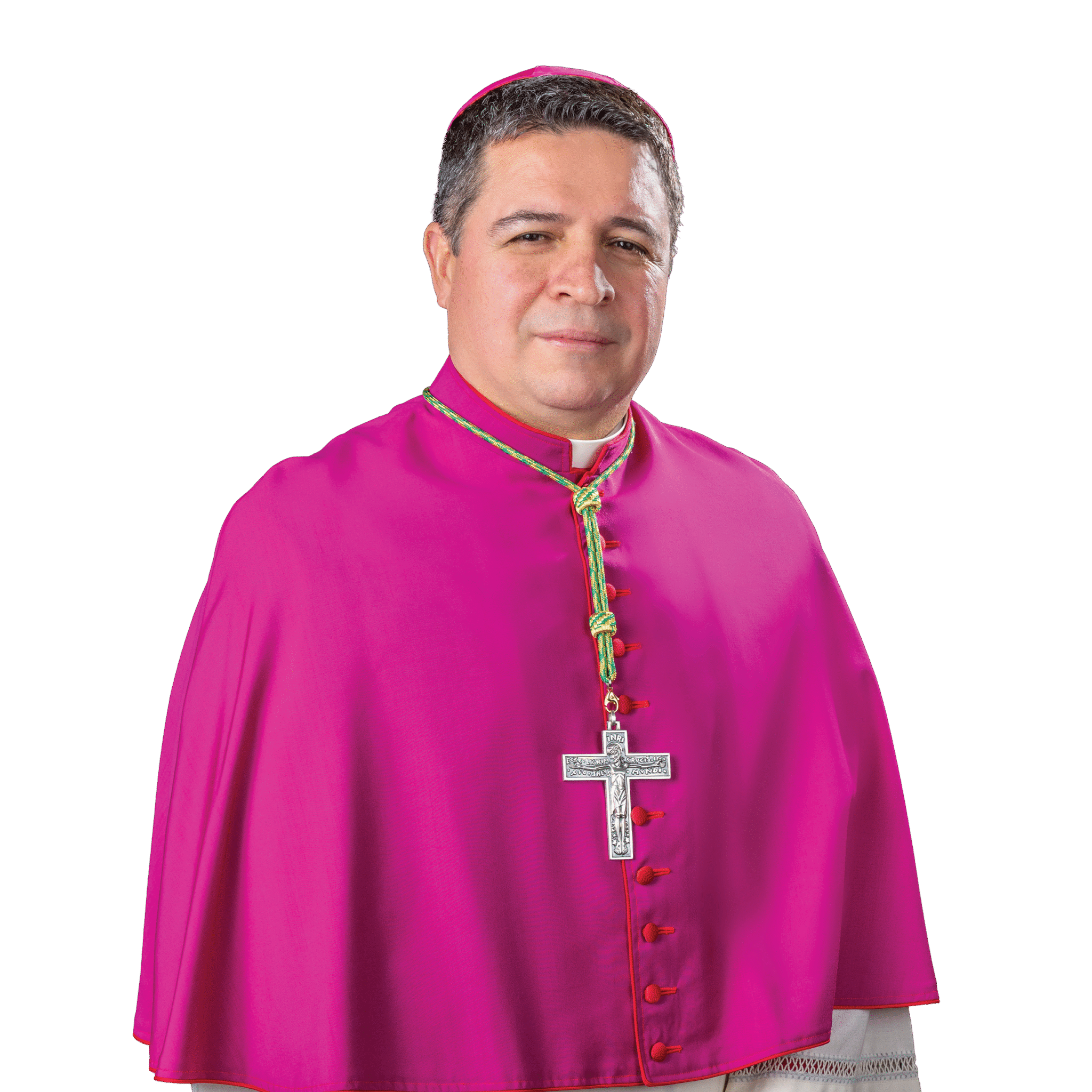
Bishop Evelio Menjivar-Ayala
Eddington remembers, “One example of Bishop Hodges’ faithfulness to implement the Second Vatican Council was when he established the Diocesan Council on Ecumenism. We met regularly with heads of other denominations – the West Virginia Council of Churches, Anglicans, Methodists, Presbyterians, Lutherans and others.”
Eddington recalls, “Regarding interfaith marriage, Bishop Hodges himself – as well as leaders from other denominations – signed on to official guidelines for how clergy should conduct interfaith marriages in the diocese of Wheeling-Charleston. Given the great preponderance of other faiths, it showed an openness and respect for other beliefs that was quite radical.” In fact, notes Eddington, “Hodges got push back from the Vatican. He responded, ‘By the authority I have as a bishop, this is what we’re going to do. Period.’ And that was it. He was faithful to the documents. That took guts to stand up to the Vatican in that way.”
Such leadership from the bishop has been the exception rather than the rule, asserts Eddington. For instance, Bishop Shulte shut down the ecumenical outreach when he replaced Hodges in 1985.
Speaking of some of the previous bishops assigned to West Virginia, Eddington says, “They ruled rather than pastored the church of West Virginia.” But Bishop Menjivar-Ayala will be radically different, believes Eddington. “I think he’s bringing a dedication to ministry rather than political expediency.” He adds, “(When I was pastor) in Huntington, what would have changed (under Bishop Menjivar-Ayala) is that I would have been supported in my style of ministry rather than constantly being opposed to my style of ministry. That is a very important difference for me as a pastor, that I would be supported rather than opposed by the then-bishop.”
In fact, Eddington believes Bishop Menjivar-Ayala’s presence will stir the pot in West Virginia. “The political implications are going to be very evident for the pastoral ministry, which is the ministry which I think he’s going to bring. Jesus’s ministry had definite political ramifications. That wasn’t Jesus’s intention because he was a man of compassion and approached the concerns of the people, but his ministry still had major political repercussions.”
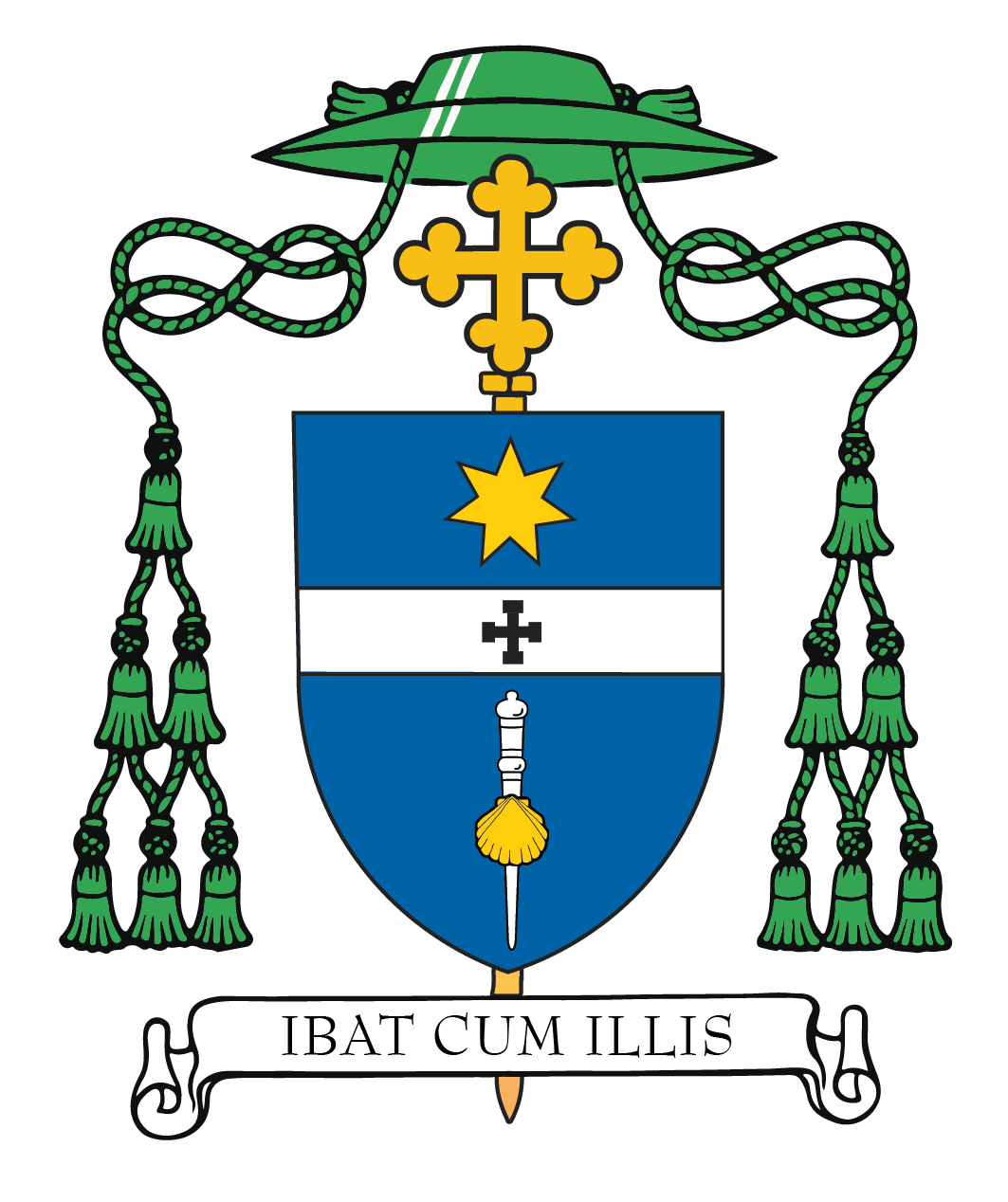
Eddington also sees signifcance in Bishop Menjivar-Ayala’s Coat of Arms. “The motto on his Coat of Arms, by the way, translates: ‘He walked with them.’ This is a reference to Luke 7:6, where Jesus agrees to go to the bedside of the centurion’s ailing servant.” Eddington points out that there are lessons from this brief passage – the Centurian, uncharacteristically, shows concern for his servant and Jesus is violating numerous religious beliefs and political customs. “That whole preamble, ‘He walked along with them’ – in a diverse and politically charged atmosphere – to me is signifcant.”
Eddington concludes, “What I’m curious to see while Bishop Menjivar-Ayala is in West Virginia – a place with so much diversity among parishes – is how how his pastoral approach will play out with them.”
[…] Leo XIV certainly is causing consternation inside The Beltway, unceasingly calling for peace and installing an immigrant bishop in charge of the Catholic Diocese of West Virginia. There are countless topics which must be addressed; war and our government’s assault on […]


[…] Note: Part 1 of 2. Read Part 2 here. […]
Michael,
I was elated several days ago when I heard about the appointment. Your write up hope-filled, which is so needed. And Pope Leo! Wow!
[…] Leo XIV certainly is causing consternation inside The Beltway, unceasingly calling for peace and installing an immigrant bishop in charge of the Catholic Diocese of West Virginia. There are countless topics which must be addressed; war and our government’s assault on […]