LENOIR, N.C. – Libertarian Rob Luffman is taking on incumbent Virginia Foxx for the privilege of serving the people of North Carolina’s 5th Congressional District in the U.S. Congress. She will be 83-years-old on Monday, June 27. Chuck Hubbard is the Democratic challenger. The General Election is set for November 3. Early voting in North Carolina begins on Oct. 15 and ends on Oct. 31.
In doing so, Luffman takes on an Inside-the-Beltway aging power broker that has been in Congress more than 20 years. She was elected to the seat in 2004. That is twice as long as she would have served if Luffman’s campaign promise to champion term limits was presently law. Indeed, when she turns 83 on Monday, she will be the same age as Joe Biden – the guy that the GOP has been calling too old for years.
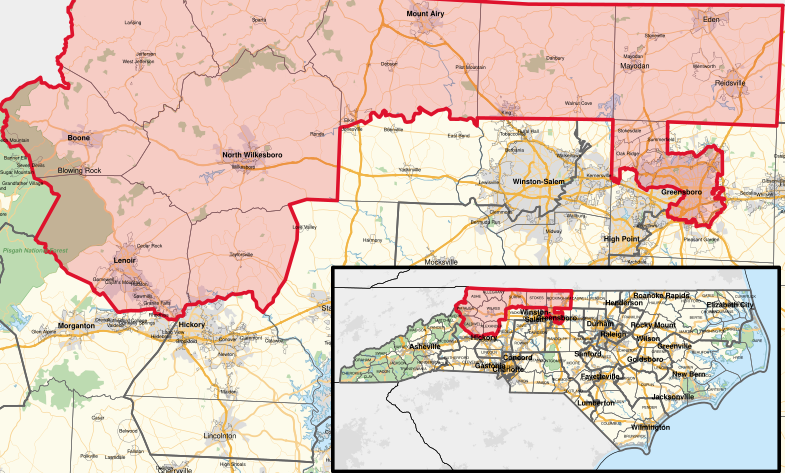
All of Caldwell County is in the 5th District, as are all of Alexander, Alleghany, Ashe, Rockingham, Stokes, Surry, Watauga and Wilkes counties; it also include a portion of Guilford County, including a large area of Greensboro.
In a recent interview, Luffman shared his vision and reasons for seeking election. It is reprinted below with permission from the Libertarian Party of North Carolina.
Background & Motivation
Tar Heel: You’ve spent over 25 years as a truck driver in the transportation industry and live in Ronda, North Carolina. How has that blue-collar, real-world experience shaped your decision to run for Congress in District 5?
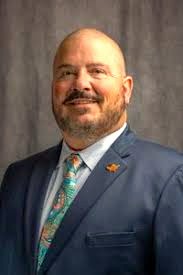
Rob: My career choice has allowed me to drive through the 48 contiguous states, and the lower provinces of Canada. Here, there, everywhere, and all the places in-betweeen. I’ve seen how the culture shifts between the northern and southern borders, and the east and west coasts. We are a vast nation of many cultures. I have watched for decades as politicians pick and choose a certain population to lift up or demean, depending on their party. As i watched during my travels, I realized that since different areas are run by different parties, neither party was for me. I was always registered as Unaffiliated until a few years ago. I have planned my run for Congress for over a decade now. A few years ago, I joined the LPNC, for the ballot access. The more I learned about the party, the more I liked it. The Left and Right have made it virtually impossible for anyone in NC to run unaffiliated. With the LPNC’s blessing, I signed up to run. It is more like a casual stroll than a “run,” because I continue to operate my business as usual. I am a working man, answering emails, joining webcasts, town hall videos, and online interviews etc. My friends all work for a living. I can relate to the people of NC-5, because any burden they face, I face as well.
Tar Heel: As a Libertarian candidate from rural northwestern North Carolina, what finally pushed you to step up and challenge the major-party candidates in a district that’s historically leaned heavily Republican?
Rob: The tree of Liberty….. I offer myself as tribute! Seriously. Someone had to take a stand. Traditionally, and in this election as well, the Democrats put their sacrificial lamb on the ticket. This district is heavily Republican, but I think the people long for something more. We essentially vote for the “lesser of two evils” here. My strongest following so far is adults under 40. The ones who’ve lived thru at least two regime changes in Washington. They realize that no matter which major party they vote for, the status quo remains the same. Wages are flat. They can’t afford a house. Sometimes 3 generations of a family live under the same roof around here, with no hope in sight. I talk to and hope to represent these unrepresented individuals.
Tar Heel: Your campaign has emphasized being a “low-budget” candidate with a grassroots approach. What inspired you to run this kind of authentic, people-powered campaign?
Rob: We are broke! My supporters are broke. So far I’ve spent over $2,000 out of my own pocket to sign up and build my website. I don’t want my supporters’ money, or anyone else’s. I do not want to sell myself out to big corps, foreign governments, lobbies, special interests etc. We have a Constitution. Our Founding Figures laid it all out well. The people cast votes, not corporations. I see this like a job application. I am applying for a job, but the individuals are responsible for hiring me. So word of mouth is the way. Screen record my videos and post them on different social media platforms. Talk to one another. Yard signs equal landfill waste.
Core Libertarian Philosophy

Tar Heel:
- As a Libertarian running for federal office, how do you explain the principles of individual liberty, limited government, and personal responsibility to voters in a conservative rural district like NC-5?
- You’ve talked about cutting federal agencies and reducing bureaucracy. Where do you see both Democrats and Republicans in Congress getting it wrong when it comes to expanding the size and scope of the federal government?
- If elected, how would you work to restore constitutional limits on federal power and push back against the administrative state?
Rob: I’ve got to get the message out: fear of the flip. Think about Federal law enforcement for a minute. ATF, NSA, FBI, CIA, BIA, CPB, and ICE are all under the control of the DHS, which is part of the Executive branch. What happens when the opposition takes control? The red voters in this district may be cheering today, but what happens when that power flips and these agencies are used against them? It is the same scenario that happens in Congress when they decide to kill a Filibuster. Next Congress will use that open door against them. Once Pandora’s Box is opened, it is very hard to close. We need to limit executive power and congressional power, bringing both back down to the guidelines of the Constitution. Take the power away from the Government and give it back to the people. This is my core Libertarian belief. My aim is for people to see this, before it is too late and the future is lost for generations to come. Once elected I’ll do my best to leverage in any resolution for limiting government power.
Key Campaign Priorities
Tar Heel: You support congressional term limits. What specific term-limit legislation would you introduce or support as a member of Congress?
Rob: I plan to introduce legislation to limit Congressional terms to 12 and 10 years. This equals 2 Senate terms, totaling 12 years. Along with 5 House terms, totaling 10 years. Do my best to force a vote on a Constitutional Amendment regarding these limits. A law won’t do it. It has to be voted on it, and it must be added as an amendment. I think the people would support it, but the parties and power hungry individuals in office today refuse to make it so. If elected, I will only seek my 5 terms. May run for another office after that.
Tar Heel: You’ve advocated for cannabis legalization, especially for veterans. Walk us through your position on federal marijuana reform — including rescheduling, medical access, and criminal justice impacts.
Rob: I believe the benefits outweigh the negatives when it comes to cannabis. Big Pharma and the liquor industry give up a lot of money to keep it scheduled and illegal. I will fight for the nationwide legalization and use of it, and products made from it. I would also like to open up a gateway for those previously convicted of simple possession charges to have those records expunged freely. No spending tens of thousands of dollars in court trying to remove it. There is also some confusion in NC at the moment. Many people think that North Carolinians will vote to legalize cannabis on the ballot this fall, but the measure is currently stalled in the State Assembly. I believe the introduction of false movements is being pushed to undermine Libertarian agendas such as this.
Tar Heel: As someone with decades in the trucking industry, what federal transportation and infrastructure reforms would you push to help small businesses, independent drivers, and rural communities in District 5?
Rob: Buddy of mine went to Europe with his daughter on her senior trip a few years back. He told me I’d be really happy with the condition of the roadways in Europe. Super smooth, super highways. I told him that it is easy for them to have nice things, when we pay for their ENTIRE continental defense. Outside of equipment payments, my biggest annual expense is diesel fuel. Every gallon of gas and diesel is taxed at the pump. State and Federal taxes are factored into the pump price. So why are bridges failing? Why would a gravel road be smoother than some of our interstate highways? Not just in NC, but all across our nation. We have already seen how an administration with too much power can withhold funds for things if it doesn’t get its way. Why did our Democrat AG have to sue FEMA to get the Helene funds released? We have a Republican President, Republican House Representative, and Republican Senators, but the Democrat AG had to sue to get our funds. I guess those individuals had no issue leaving their mountain homes and cabins. The rest of us were just left to suffer. The folks of this district are my friends and neighbors. I watched them suffer firsthand. Regarding trucking, fatigue from a day of driving on these poorly maintained roads is real. If we are to be respected on a global level, to be the bright shining light of a Nation for the world to look up to, we must rebuild our infrastructure. Start from the ground up.
Tar Heel: You’ve called for reducing the size of the federal government. Which specific agencies or programs would you target for major cuts or elimination first?
Rob: Do we really need 17 federal law enforcement agencies? Taxes are real. We all hate paying them. Our Federal government is large, bloated, and grossly over budget. I would examine each individual agency, and budget line item and start creating an elimination list. With the ultimate goal is to trim enough fat to eliminate individual income taxes and the IRS within two years. Like DOGE, but a real cut. Don’t start by making government bigger before pretending to make it smaller.
Broader Federal Issues
Tar Heel: The national debt continues to balloon. What’s your Libertarian approach to fiscal responsibility — balanced budgets, spending caps, or entitlement reform?
Rob: LINE ITEM VETO! It is already proven that the budgets passed by Congress are full of cut-and-paste, regurgitated waste. We must agree to work efficiently to cut out the spending cancer before it kills us fiscally. If I ran my business like Congress runs this country, I would have been bankrupt decades ago. I would like to make SSI voluntary. The ROI on SSI is poor. I propose that individuals, as a part of their individual liberty, can invest in a retirement account on the open market.
Tar Heel: As a Libertarian, where do you stand on U.S. foreign policy, endless wars, and reasserting Congress’s constitutional war powers?
Rob: I believe we need to focus on fixing ourselves, before attempting any more foreign policy. How can we hold other nations accountable, when we have such problems ourselves? If we build up our nation and people, others will respect that and long to be more like us. Show what we can do, instead of enacting a foreign policy of making others bow to us. Sure in the last 250 years we have stumbled, but never fallen. I can remember times in my life when we were respected on the world stage. Had a government that worked for the people. Endless wars do not constitute good foreign policy. We will never force other nations to be more like us.
Tar Heel: Immigration is a major issue in North Carolina. What’s your stance on border security, legal immigration reform, and reducing federal bureaucracy in the immigration system?
Rob: I break away from the Libertarian party on this issue. Congress is Constitutionally liable for writing laws regarding immigration. Personally I do not believe in an open border policy, and I do not believe our current immigration system works. It needs a complete overhaul. DACA was pushed through with no clear path to citizenship. Immigrants pay to play and they can stay. De facto, modern-day slavery? I believe so. As I said before in another answer, be the shining light. Most immigrants come to this country for the American Dream. Vetting someone who just wants to live that dream shouldn’t take years and thousands of dollars in fees. My family came here to live that dream too.
Tar Heel: Criminal justice reform and the war on drugs remain key Libertarian priorities. Would you support ending federal cannabis prohibition nationwide and further sentencing reforms?
Rob: Rolling back and expunging the records of victimless crimes is a priority for this topic, as stated above. We have already seen a decrease in the private prison systems, but let’s work to end them completely. RJR out of Winston-Salem, foresaw the downfall of tobacco years ago, and bought Nabisco. Companies must invest in their own future to stay viable. Lobbying by the Pharmaceutical and alcohol industries needs to end. I personally support ending all lobbying. People should elect representatives based on their moral character, not the corporate money in their bank account.
Tar Heel: Second Amendment rights are important to many voters in rural District 5. How do you view any new federal gun restrictions or efforts to protect constitutional carry?
Rob: I just love when these questions come up and mention “constitutional carry”. Well… how can it be “constitutional carry” if it’s already in the Constitution? Basically, we have to fight for a right that we are already given. The Second Amendment is the only gun law I personally believe in. Firearm ownership is as American as apple pie. Gun laws only restrict the rights of legal owners. Every day I see criminals caught with conversion devices, 3D printed parts, or sometimes completely home made weapons. This proliferation of devices, created with ill intent, leads our government to further restrict the rights of legal owners. Criminals will cause harm regardless of the circumstances. Laws only prevent me and other enthusiasts like myself, from owning certain firearms and fully enjoying our Constitutional rights.
Tar Heel: On healthcare, you emphasize choice and competition over government mandates. What federal reforms would you pursue to lower costs and give patients and providers more freedom?
Rob: I have paid for my own healthcare insurance for nearly two decades. For a few years, I was covered under my wife’s corporate policy. She drives with me now and we pay via the ACA portal for our insurance. The BCBS insurance I had pre-ACA was cheaper and offered better coverage than what we pay for now. I know it was passed with good intentions, but it is a total wreck. Tied to tax penalties upon inception. Now our lawmakers argue over the subsidy budget, and shut the government down in order to keep it funded. Apparently, neither party wants to fix this issue. They have both had the time. I currently have no proposal for a different system, but I want everyone to know that I am open to hearing any plan or idea to resolve this issue for future generations.
Tar Heel: Abortion remains divisive. How do you balance Libertarian principles of life and individual liberty regarding federal involvement or funding?
Rob: When I was 25, the lady I was involved with decided to abort our child. She brought me the receipt and asked me to pay for my half. I told her I would rather have had my kid. Her body, her choice right? Certainly so. This life experience is my fundamental belief on abortion and women’s rights. So, if we have a federally funded healthcare system, that system should provide the healthcare needed to preserve a woman’s life. Therefore if an abortion is needed as a medical procedure, it should fall under the healthcare umbrella. Examples: rape, incest, a risk of harm to the mother etc. If someone wakes up with a change of heart, then no. That is not a healthcare issue, that becomes a personal health issue. An elective operation, such as Botox or plastic surgery, would be an out-of-pocket expense. While we are on that topic, some avenues of plastic surgery would also be considered healthcare for women. Breast reconstruction after cancer, etc.
District 5 & Local Concerns
Tar Heel: District 5 is rural, agricultural, and includes manufacturing and tourism economies. What federal policies would you fight for (or against) to keep the area affordable, business-friendly, and supportive of family farms and small businesses?
Rob: It is already getting unaffordable around here. Helping NC-5 would have to start by lowering and eliminating taxes. Helping would involve shrinking the government and government spending. Putting more money in the pockets of individuals, resulting in them having more money to spend locally. We are already overburdened.
Tar Heel: Veterans and working-class families are a big part of northwestern North Carolina. Beyond cannabis access, what other veteran-focused or economic reforms would you prioritize?
Rob: I would look to expand VA access and allow veterans to see the doctors they choose. I know several people who travel over an hour to see their assigned doctor. Currently, that costs them more out of pocket due to the price of gas. I can address this topic with the best intentions, but I want to hear from the local vets and get their answer. So I will reach out and try to expand on this in the future.
Tar Heel: Infrastructure, broadband access, and energy costs affect rural communities in District 5. How would reducing federal regulations help address these issues without massive new spending?
Rob: We are a mixed bag of utility companies and providers in NWNC. My property is on a boundary. Duke Power, but the co-op phone company. Neighbor to my left has Duke, and a different co-op phone company. To my right is a co-op power company and a co-op phone company. At one point, calling from one house to another on the family farm was long distance. We just went outside and yelled at each other. Cell phone companies are in a similar situation. I know that they bring in signal boosters and portable towers for the races at NWS. Our current cell tower system cannot handle all the extra traffic. These issues will have to be addressed case by case, as different areas require it. There are too many independent providers in this district.
Campaign & Vision
Tar Heel: Running as a Libertarian in a three- or four-way race against a longtime Republican incumbent and other challengers is challenging. What’s your strategy for getting your message out and mobilizing voters in a conservative district?
Rob: Word of mouth. Answering questionnaires. Signing up for podcasts. I’m doing my best to stay active on social media. Trying to get my message out as clearly and concisely as possible. People are already confusing Libertarianism with Liberalism, so I have to combat that at every turn.
Tar Heel: If elected, what would be your top three legislative priorities in the 120th Congress, and how would you work across the aisle (or with liberty-minded members) to advance them?
Rob: One thing I have learned since signing up in December is that today’s focus may not be tomorrow’s goal. I would like to start the push for term limits. If I can get that done in the first two years, then I can guarantee the tree of liberty will be refreshed in the future. I will work with anyone from any party on a policy that considers everyone. Not an agenda push, but a push to move our country forward for the future.
Tar Heel: Many independents and Libertarians feel ignored in Washington. How are you planning to engage non-traditional voters and send a message to both major parties?
Rob: Keep pushing my message out and hope for the best. LPNC has done significant work this cycle. We have more candidates like myself running for federal office simultaneously than ever before. This should be making the news, but the news reserves itself for R&D candidates. So we have to message. Get Vocal. Get the word out and hope that people hear us with an open mind. North Carolina is mostly unaffiliated voters. North Carolina is a swing state, which I enjoy being a part of. We keep them on their toes. We’ve managed to vote Red for President the last 3 cycles, and Blue for Governor. I hope that untamable spirit of NC helps us bring forward a change this November.
Tar Heel: Your campaign has highlighted being a true outsider with no corporate PAC money. How does that independence shape the way you’d represent District 5?
Rob: I will maintain my independence from big money and the greed it causes. We the people—and I am one of the people as well. I want to represent my neighbors to the best of my ability. The only promises and debts that I wish to owe are to the people of NC-5. Clear campaign, clear conscience. I want to disrupt the system in the true spirit of being a Libertarian. I can speak for or against any agenda, without worrying about losing campaign money. Free liberty and free individualism, for free people.
Tar Heel: For voters who agree with your Libertarian ideas on smaller government, fiscal responsibility, and personal freedom but worry about “wasting” their vote on a third-party candidate, what would you say to convince them that supporting you makes a real difference?
Rob: Let’s be real, if I manage to pull 4% of the vote this November, I will consider that a win. Anything more than that will significantly shift the status quo. I’ll probably ask for a recount if I win, because I won’t believe it either. Casting a vote for 3rd party is not throwing a vote away. You will see your vote counted and your voice heard. When enough of us speak up, it will force a policy shift from the majority parties. I am running because I believe that people are greater than parties. Partisan politics leaves many voices unheard. I stood up to give those folks a voice. I stand here for you, with you, and I ask that you vote for me this November.


© Michael M. Barrick, 2026.


Thank you for sending this interesting interview, Michael.
I agree with Rob Luffman on some principles and issues, and disagree on some others.
Yes to term limits, but a long shot since the policymakers have a vested interest in maintaining status quo.
Streamline government, of course, but very politician says he or she will cut fat.
Legalizing Cannibas is tricky with no good solution other than lifting the personal moral climate of the nation. Keeping it illegal is a recipe for filling jails and bad records and feeding the criminal drug traders. Making it legal incurs a big negative externality cost onto society, since taxes cannot be high enough to even out the increased accidents and mental health problems. Raising taxes higher to cover the social costs facilitates an illicit underground cannibas economy and state tax evasion like the smuggling of cigarettes from North Carolina to Maryland and New York.
With all that Luffman complains about high government expenditures, national debt, and tax burdens, that he does not mention in the interview the massive Pentagon budget that is as much as the next higher ten nations’ combined military budgets. And that the Pentagon cannot come close to passing the mandated audit smells of largesse, corruption, and waste.However, Luffman opposes lobbying, which the Arms industry, AIPAC, and other related special interests fuel the “war” economy.
I’ll make a comment on the 2nd Amendment by sugggesting a point on the First Amendment that includes “freedom of assembly.” Most people physically assemble together by means of some sort of motorized transportation. That motorized vehicle is titled, licensed, insured, with the operator duly licensed, and all subservient to lawful enforced rules of the road. Transfer of vehicles goes through a legal government process. I suggest the same principle apply to the 2nd ammendment. Guns titled, licensed, insured for liability, and the owner and operator likewise licensed. Just as an 18-wheeler truck driver has to pass more rigorous accredidation, or a commercial pilot has to take lots of accredited training and health checkups and background and pschological evaluations, so gradations of gun ownership would have stepups from a .22 to an AR-15.
I do not personally endorse abortion on demand on moral grounds. However, I my moral belief system is not to be coerced upon a reluctant society. For the common good, I would resonate with President Bill Clinton’s suggestion that “abortion be safe, legal, rare.”
I think it would be healthy for the common good for Rob Luffman to be elected to Congress. I’d llke to see a major turnover it Congress.
By the way, I will mention that I know quite well the Democratic Party candidate for U.S. Senate in the seat currently held by Shelly Moore Capito. Rachel Fetty Anderson is the sister of our oldest son’s ex-wife Joan. I have know Rachel for 25 years. She grew up in a very dysfunctional, impoverished family. (her siste Joan became an MD doctor but eventually mentally crashed). Rachel is an attorney who works for the disenfranchised and poor. She has emphathy and compassion, besides being very smart. She has donated a kidney, adopted a special needs child (besides having a biological daughter). She is in West Virginia when her husband (similarly raised in a dysfunctional home) came to WVU for dentistry studies, and now practices in Bridgeport.
Thank you, my friend, for sharing about Mr. Luffman.
Blessings! —Allen