“Biography has historical value when it touches the common or community life or presents typical facts illustrating conditions of community life.”
– Dr. James Morton Callahan, History of the Making of Morgantown, West Virginia, 1926.
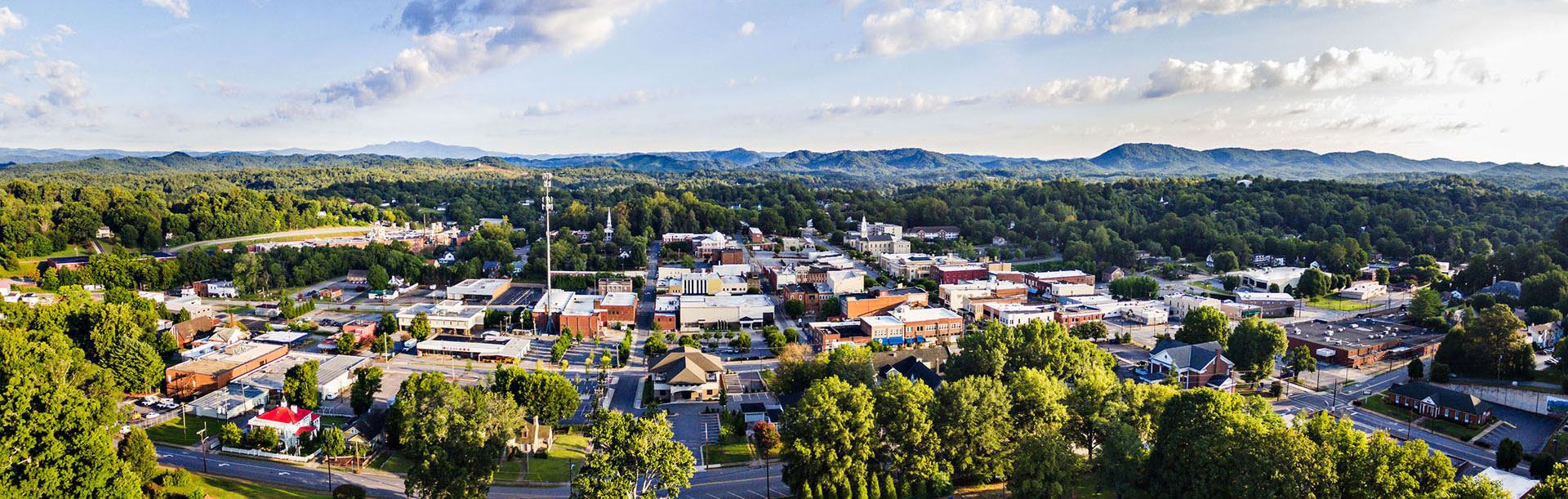
LENOIR, N.C. – Last month, I wrote that we were expanding our community engagement through our work at the Appalachian Chronicle.
Simultaneously, a brick-and-mortar location became available here in Lenoir from which we could grow. As we considered the possibilities the building offered on other projects we have going – and our mission as a news organization – we determined it was time to expand not only the Appalachian Chronicle, but also another organization that’s been in hibernation – Grassroots Appalachia.
We believe Appalachia’s greatest resource is her people. Helping to create conditions favorable for community life is why Grassroots Appalachia exists. We work to connect and cultivate Appalachian people and traditions in Lenoir and beyond. How do we do it? Visit here for details.
We’re located at 458-B Harper Avenue in Lenoir. Our first events will be in mid-August. On Tuesday, Aug. 18 we begin with an art exhibit with works more than a century-old, which is detailed below. Additionally, on Wednesday and Thursday of that week we will have hands-on activities and a focus on Caldwell County writers and literature.
First though, on Saturday, Aug. 15, Grassroots Appalachia will host the cast and crew of “Don’t Rock the Boat,” a documentary exploring political polarization in America through the lens of stand-up comedy and an unlikely icebreaker: whitewater rafting. The project centers on two stand-up comedians — one an outspoken voice from the left, the other from the right — who will perform a comedy show built around their political material before rafting together through RAFT for America, an organization that pairs people from across the political spectrum for constructive conversation following a shared whitewater experience.
“Biography has historical value when it touches the common or community life or presents typical facts illustrating conditions of community life.”
– Dr. James Morton Callahan, History of the Making of Morgantown, West Virginia, 1926.
Such activities are consistent with the insight of Dr. Callahan’s 100-year-old quote from above; they have stood the test of time. Personal and community histories instruct and guide us in discerning the community we desire. In this digital age we must be intentional about seeking personal connections and learning our histories; our communities need us to involve ourselves. After all, living in harmony will occur only when we consider, observe and create – in agreement with others – the conditions favorable for community living.
So we begin our very first Exhibit considering people and places from the past through the storytelling brush strokes of Fred Boger (1857-1936), a painter of the late 19th and early 20th centuries. Born in Baltimore, his historical illustrations and landscapes paintings are instantly recognizable. An itinerant artist, he captured scenes from Cincinnati, the American Southwest, the Midwest, Savannah, and elsewhere. Coastline and maritime scenes were common subjects of his. The works of two of his contemporaries are also included.
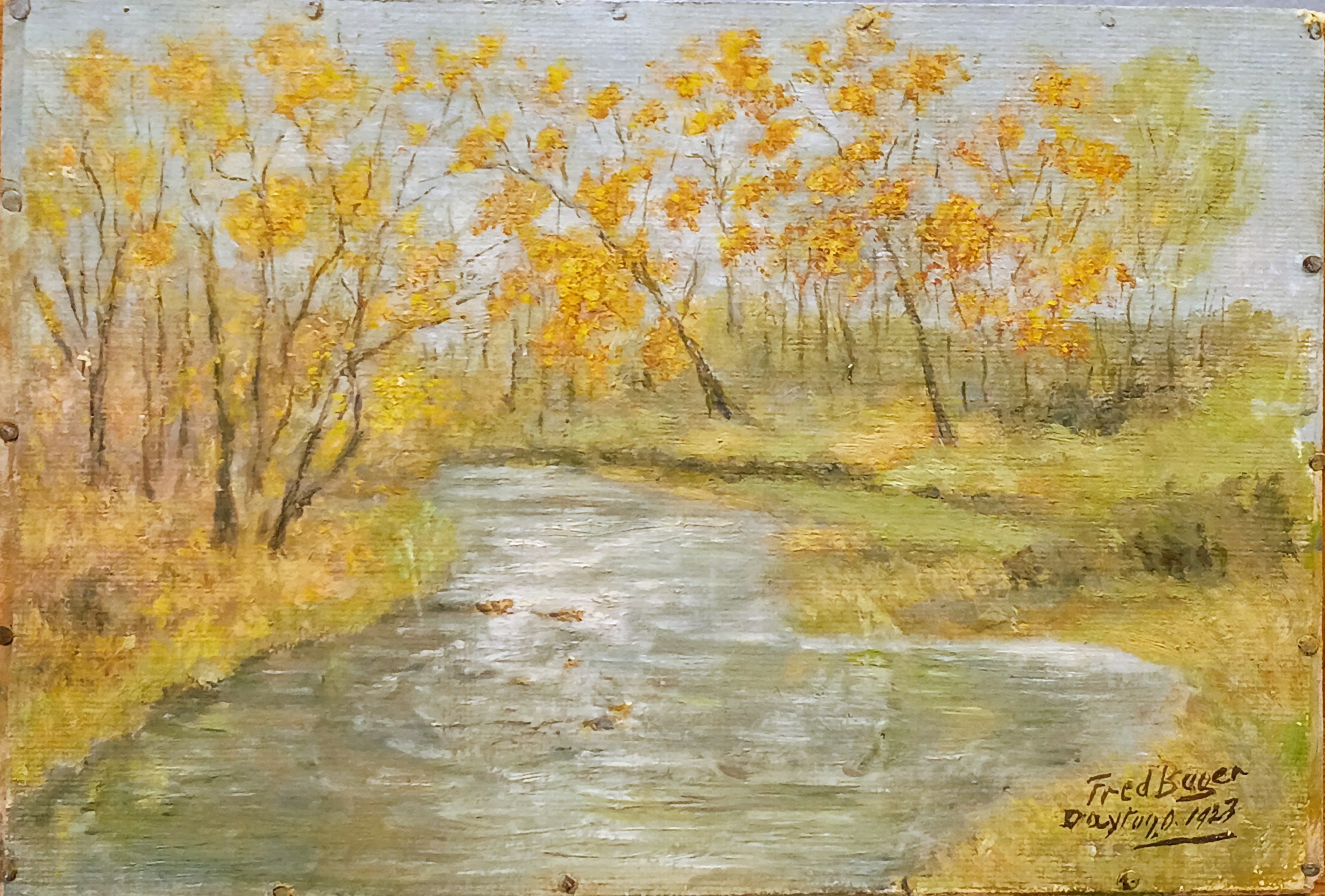
During his life, Boger’s work was exhibited at the University of Cincinnati and he was a member of the Cincinnati Art Club. He worked primarily with oils on canvas or wood panels. He also painted the occasional watercolor. All are in this exhibit. To find his work is rare. It has generally been held in small private collections. This collection, imperfections and all, belongs to Sarah Barrick of Lenoir, the great-granddaughter of Fred Boger.
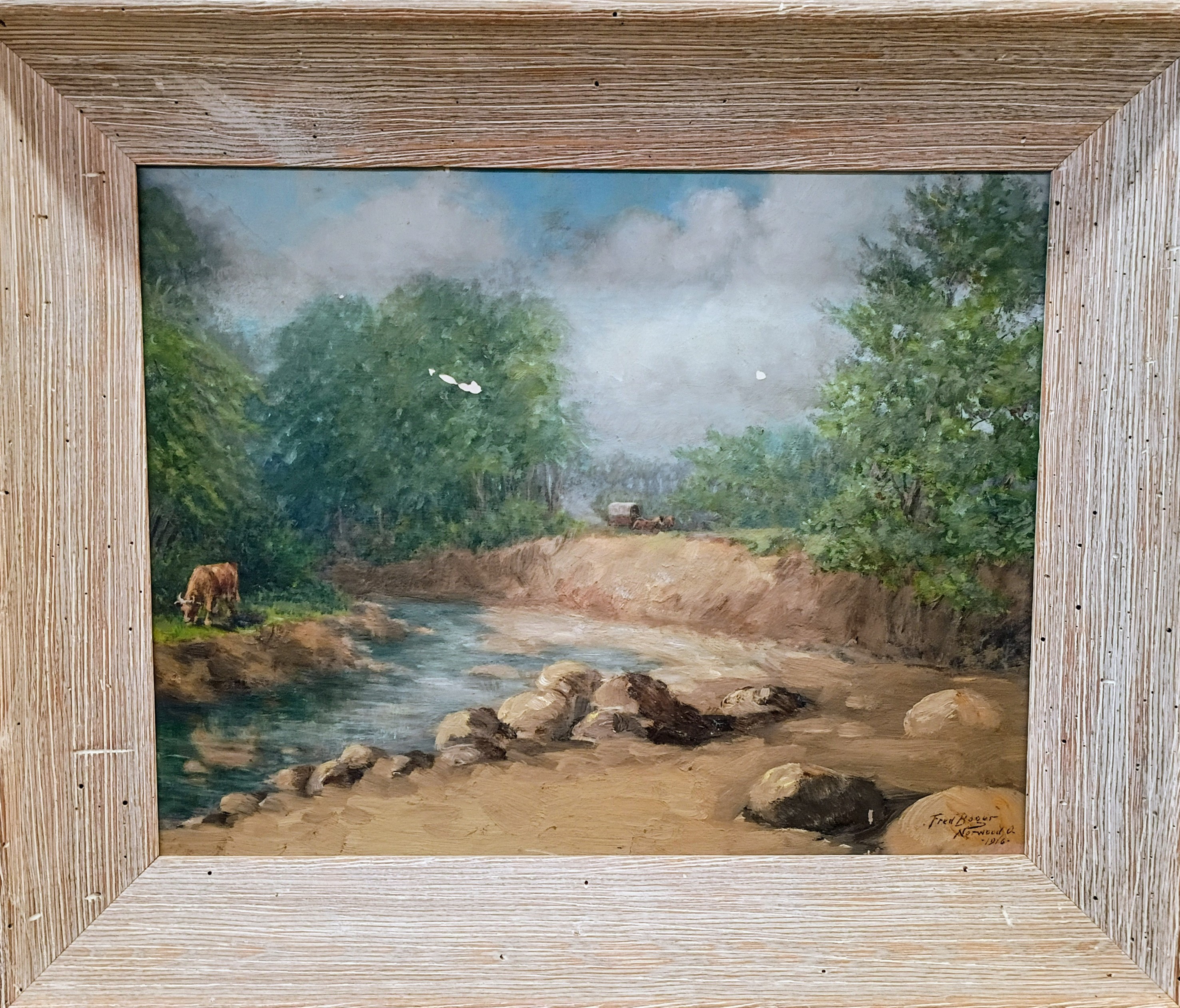
There is no better way to consider the Conditions Favorable for Community Life than through the eyes of an itinerant artist, who made a living intentionally wandering the land. Mr. Boger’s art reminds us that our art, however we express it, can live beyond us and lead others to wonder about the past as they wander forward on their own paths. While worn with age, we hope each painting allows you to pause and contemplate a calmer, quieter time. Perhaps it will inspire you to imagine the community you desire and join with your neighbors – through Grassroots Appalachia or any number of ways – to help create it.
We hope you’ll visit Grassroots Appalachia so that we can work together to continue to create the town you find favorable for community life.
© Michael M. Barrick, 2026




[…] N.C. – A couple of days ago, I introduced our new venture, Grassroots Appalachia. The purpose of Grassroots Appalachia is help create conditions favorable […]
[…] Creating Conditions Favorable for Community Life […]
[…] Creating Conditions Favorable for Community Life […]
[…] Tuesday, Aug. 18 @ 6:30 – 8 p.m.: Art Exhibit, “An Exploration: Creating Conditions Favorable for Community Life.” It considers people and places from the past through the storytelling brush strokes of Fred Boger (1857-1936), a painter of the late 19th and early 20th centuries. Learn more here. […]
[…] Creating Conditions Favorable for Community Life […]
[…] M. R. Sonneberg was a student of Fred Boger. Little is known of Sonneberg. In these three watercolors from our family collection, the blues and yellows dominate the scheme, yet simultaneously enhance the other colors and elements. They are likely about 100-years-old. Learn more here. […]
[…] Creating Conditions Favorable for Community Life […]
[…] Creating Conditions Favorable for Community Life […]
[…] Creating Conditions Favorable for Community Life […]
[…] Creating Conditions Favorable for Community Life […]
[…] Creating Conditions Favorable for Community Life […]
[…] Creating Conditions Favorable for Community Life […]
[…] Creating Conditions Favorable for Community Life […]
[…] Creating Conditions Favorable for Community Life […]
[…] Creating Conditions Favorable for Community Life […]