LENOIR, N.C. – A Philadelphia native, Caldwell County Fiddle Maker Bob Kogut was more than skeptical when he attended a Bluegrass concert with some friends decades ago.
Kogut recalls, “I went to an old-timey Bluegrass festival in Sunrise, Maryland. I had no idea what bluegrass was. I didn’t have a fiddle. I played guitar. Bill Monroe and the Blue Grass Boys played. When they came out in their matching suits, I thought they looked like used car salesmen. Then they played the most beautiful music.” The fiddle player, Kenny Baker, mesmerized Kogut. He recalls, “I got hooked on the fiddle at that event.”
Kogut, Lenoir musician Terry Edwards and other local musicians will host a Song Night next Tuesday, Oct. 6 at Grassroots Appalachia at 458-B Harper Ave. It begins along about 6:30.
Eventually, after a few twists and turns along the road, Kogut met Roberta, his wife of more than 20 years.
“When I started building fiddles. I learned a big lesson in life. It has to be exactly precisely right. It has 80-plus parts inside and outside. Every part has to be perfect. You can’t hide your mistake. When it’s not good enough, you start over. I am a perfectionist. Not perfect. A perfectionist about whether or not it is going to sound good. Good enough is not good enough. It’s got to be right.”
Bob Kogut
It was his work in Florida as a physical therapist that led the Koguts to Caldwell County through, of all places, Merlefest. “We were living in Orlando. I was treating performing artists and musicians with repetitive problems. Like many musicians, they just practiced too much.” He continues, “So one day I got a call from Merlefest. One of their supporters had some physical problems and wanted me to take a look at him.” Soon, he found himself in Wilkesboro via a flight arranged by the folks at Merlefest.
That one phone call turned out to be life-changing for Kogut.
At the time, Kogut was playing guitar but had begun making fiddles. After helping his new patient with a few tips to mitigate the repetitive injuries, the fellow – and, as it turns out, a significant supporter of Merlefest – asked him, “Do you make fiddles?”
While he was new at that, his patient had an idea. Kogut remembers, “He said, ‘Come to Merlefest in April. Do a workshop on repetitive strain injuries.’ I said I’d like to do that. That was my first Merlefest.”
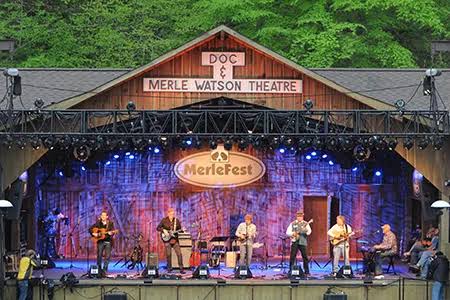
It certainly wasn’t his last. In fact, he is now a Merlefest sponsor. “We fell in love with the people, the area, culture, and found out how many fiddle players there were.” Indeed, it precipitated a move to North Carolina. He and his wife Roberta had visited many areas of the state and along the way, he was offered an opportunity to interview at Caldwell Memorial Hospital. Roberta, while he was in the interview, drove around the county. Kogut recalls, “The interview went well. They offered me a position. I thought I think I’d like to be here. Something about this place could be a home. When my wife came back I was afraid to tell her this is where we should relocate. She was thinking the same thing. Driving around, she liked the town and had driven through Happy Valley.”
It was there they decided to live and a month later were living there. It was 1999.
While the area had many draws for the Koguts there was one aspect that Bob really liked. He explains, “When I was making fiddles in Orlando, it was kind of hard to find people interested in the fiddle, to play my instruments.” Here though, he adds, “Everyone and their uncle plays the fiddle. I liked that they play the instrument I build. It just happened.”
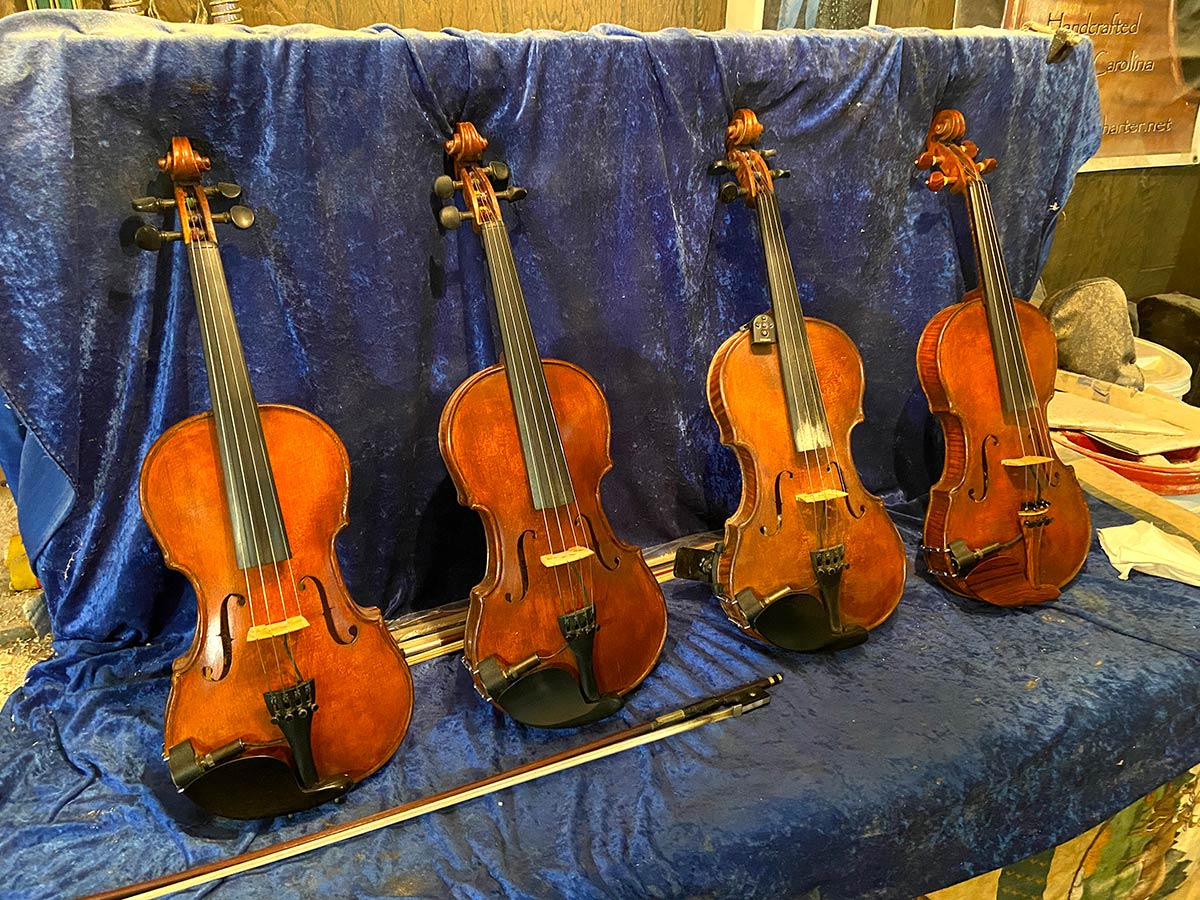
And, he is as prolific as ever at building fiddles. He just finished number 320. As he noted the intricate craftsmanship that go into each step of building a fiddle, he says, “I’ve always been pretty good doing things right. Being careful. Like when I was a kid, putting models together with not too many parts left over.”
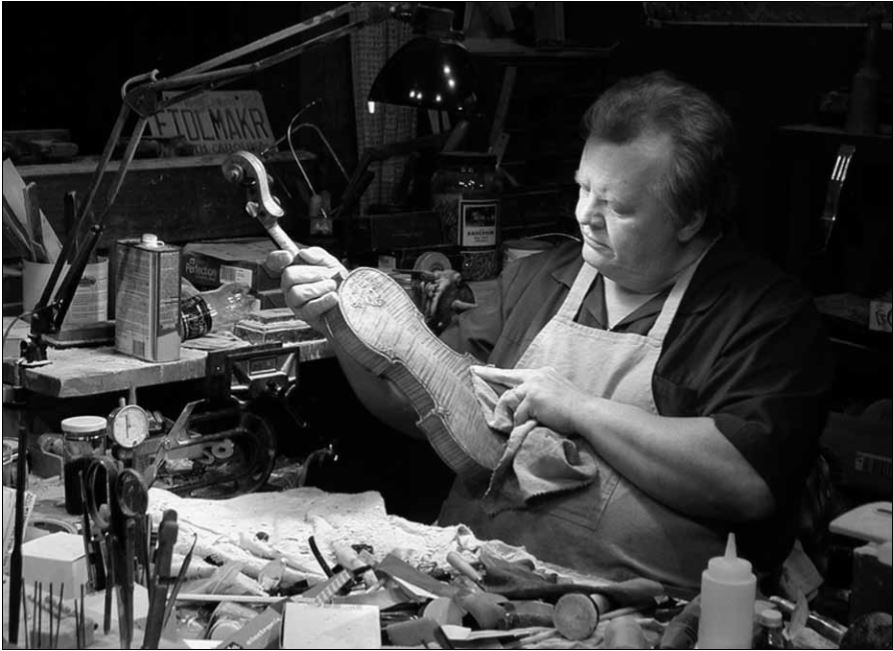
That nature has come in handy in his work as a fiddle maker. He says, “When I started building fiddles. I learned a big lesson in life. When it comes to building a violin, you have to be OCD. It has to be exactly precisely right. It has 80-plus parts inside and outside. Every part has to be perfect. You can’t hide your mistake. If you make it and don’t fix it, it’s going to magnify it. When it’s not good enough, you start over. I am a perfectionist. Not perfect. A perfectionist about whether or not it is going to sound good. Good enough is not good enough. It’s got to be right.”
Explaining what is critical to him as a fiddle maker, Kogut offers, “My passion is sound and voicing – the personality of how they sound.” He adds, “They’re not ‘case queens’ for how they look. I’m happy with how they look. But as looks go, they are not perfection. How they play and how they sound requires being OCD about building them or it just isn’t going to sound good. Arching the top and back plates, the curve of it, has a lot to do with it. The thickness of plates, which we call graduation. Has to be absolutely perfect.”
As he tells anyone that will listen, he’s not ready to stop. “To accomplish my passion, I want to build a holy grail violin. I’ve never been that way with anything before. It’s humbling. It teaches you how to do something right.”
Indeed, he’s learned much from making fiddles – and then playing music on them in a live performance. It takes Kogut about four to six weeks to make a fiddle, but that is not necessarily the end of the work. Just recently, while playing a short set with Roberta and Terry Edwards at White Horse Black Mountain, Kogut didn’t like how his latest creation sounded. He explains, “The voice keeps changing. The only way to know if it’s a good sounding fiddle is take it and play with other instruments in a live performance situation. I thought it was great sounding. It didn’t behave.”
So, he took it to his shop, took the top off and redid it.
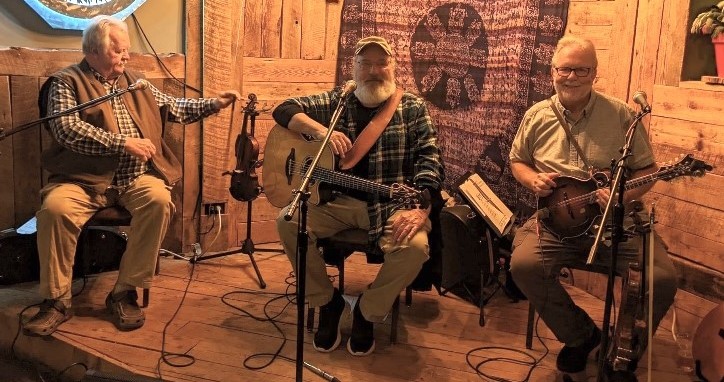
He also enjoys his role as a sideman. “With Terry Edwards. I’m his side man. He’s the show. I’m the sideman. I see my role as playing whatever I can play to make support him – playing backup to his singing, playing to support his vocals, his guitar playing, and the emotion of the songs that he writes. And to not get in the way of what he’s doing.”
He adds, “I love for people listening to music to feel something they’ve never felt before. Terry’s like that too.”
Kogut uses older tools when building a fiddle. He explains that it is practical and perhaps even a bit mystical. “I have hand tools that were used and made by fiddle makers from years ago, that I’ve collected over time. There’s two reasons I like to use older vintage hand tools in my work. One reason is the quality in steel that was available and used 50 years ago tends to be superior to that steel that’s available today to sharpen to a razor’s edge and hold its edge. The handles of the tools really fit my hand and they’re worn down enough in my hand that it is more comfortable than a brand new tool.” But there is more. “These old tools have a spirit in them,” says Kogut. “When I’m using an old hand tool that I know that an instrument maker used a long time ago, I feel their spirit and passion is still in that tool. I like to be part of that.”
Being among the best fiddle-makers in the world, with his fiddles/violins spread among nations and people of a wide variety of talent does have its distractions. He gets regular visits by musicians to his shop that sometimes turn into jam sessions. Kogut offers, “They are distracting, but I love for people to come over and play because listening to the instruments while I’m carving reminds me why I’m doing it in the first place.” He admits, “But if I’m at the bench and they’re playing I have to put down my knife and pick up my fiddle and play with them. I can’t stand it.”
Kogut worked as a physical therapist for 47 years. He is also a pioneer in using music as therapy. He explains, “When I was in PT school part of the requirements to graduate was to do a thesis. I decided to do my thesis on using music as therapy. Now, 50-some years ago there was no music therapy. Now there are professional music therapists.”
He continues, “So I conducted a clinical experiment where I took some Sony Walkmans and headphones into the ICU at Temple Hospital where I was studying. We put the headphones on the patients that were unconscious and played music through the headphones to try and observe if there was any affect on them. Amazing things happened. After several days, several patients regained consciousness after being unconscious for extended weeks. And other patients at a later time that regained consciousness were able to tell us that they remembered hearing the music while they were unconscious. So that experience told me how important music is to life.”
He recalls a story from the now-defunct Happy Valley Fiddlers Convention that speaks to the mystical power of music. “One year at the Happy Valley Fiddlers Convention, two women walked up and they were listening to us. One asked, ‘Can you play a waltz on the fiddle for my sister? She loves waltzes.’ Then she added, ‘She is deaf.’” Kogut acknowledged being a bit perplexed. But not for long. He continues, “Her sister asked, ‘Can she touch the top of the fiddle? That’s how she hears the music.’ So, she had three fingertips on it as I played. She was smiling with her eyes closed the whole time. So I witnessed the power of music to not only be heard but felt.”
He adds, “Now every time I carve a fiddle, I think of her. I wish I had that ability to feel the voice of that fiddle top.”
Kogut will be bringing those experiences and outlook on the power of music with Terry Edwards and other musicians hosting a Song Circle at Grassroots Appalachia, our new Art Gallery, Listening & Gathering Space and Fair Trade Arts & Crafts store. We are located at 458-B Harper Ave. in Lenoir.
Kogut says he’s looking forward to it for a number of reasons. “I love to play with Terry. And I’ve been following what you’re doing here Michael – what you’re writing and what others people are saying and what you are trying to accomplish. I think it’s a great thing and important thing for our community and very much needed. I want to be part of it. I want to see music as art to be part of this project.” He adds, “I love to play where I can. And with Terry.”
Learn more
Carl White’s Life in the Carolinas
Wilkes Heritage Museum Blue Ridge Music Hall of Fame
Blue Ridge National Heritage Area (Violins)
Related Articles
Terry Edwards and Bob Kogut to Host Acoustic Song Circle at Grassroots Appalachia on Tuesday, Oct. 6
© Michael M. Barrick, 2026. The Appalachian Chronicle is a publication of Grassroots Appalachia.





[…] Caldwell County Fiddle Maker Bob Kogut Shares Why and How ‘Music is Important to Life’ […]